
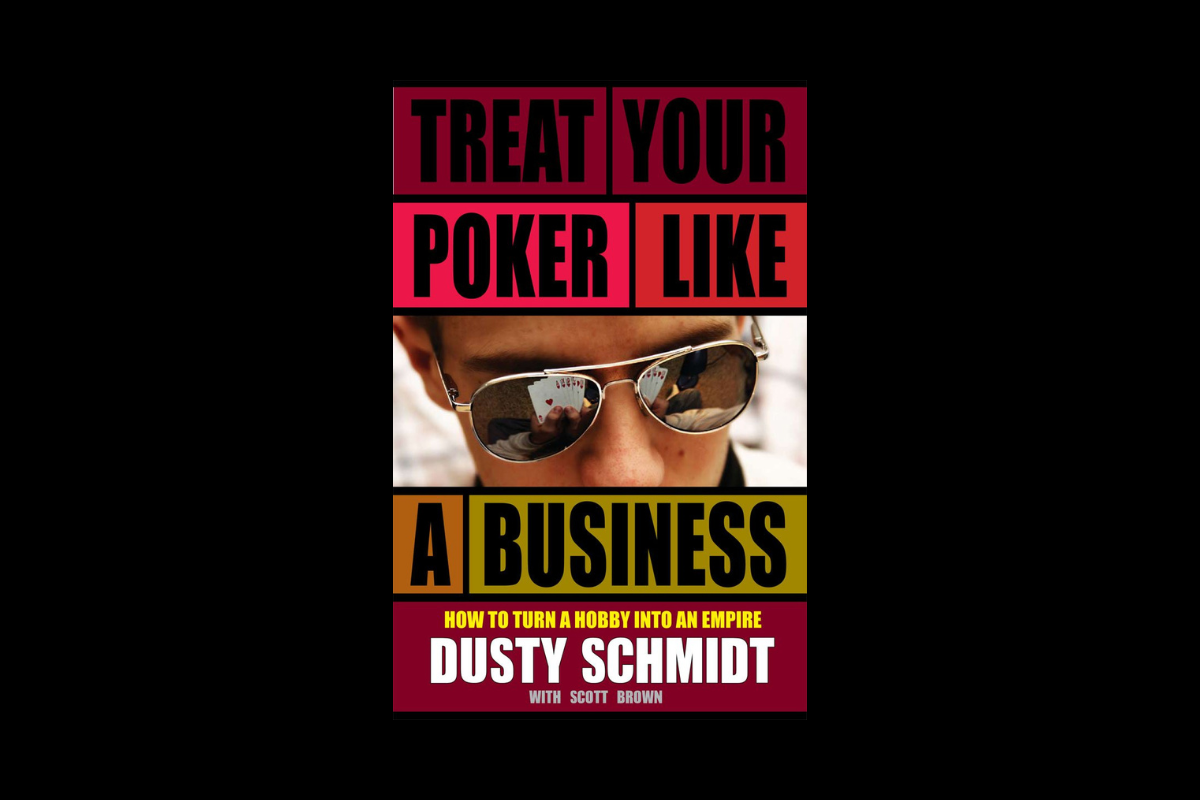
Here are chapters 6-10 of our Treat Your Poker Like A Business summary:
Chapter 6: Specialization—Becoming a One-Trick Pony
In chapter 6 of Treat Your Poker Like A Business, Dusty Schmidt argues that specialization is one of the fastest paths to consistent profitability.
Narrow Your Focus
Instead of spreading yourself thin across:
-
Multiple formats
-
Multiple stake levels
-
Multiple poker variants
Schmidt recommends becoming highly skilled in one specific game type and stake.
He compares this to business specialization. Companies that dominate a niche often outperform those that try to do everything.
Repetition Creates Edge
By focusing on one format:
-
You encounter similar situations repeatedly.
-
You refine your decision-making.
-
You develop deeper reads on recurring opponents.
-
You reduce learning curve inefficiencies.
The goal is mastery through volume and repetition, not variety.
Chapter 7: Work Ethic and Volume
In chapter 7 of Treat Your Poker Like A Business, Schmidt emphasizes that poker rewards disciplined work.
Poker Is Not Passive Income
Many players underestimate the volume required to smooth variance and generate steady income. Success requires:
-
Significant hours
-
Consistent focus
-
Structured routines
He stresses that putting in volume helps:
-
Realize your edge
-
Reduce the emotional impact of short-term swings
-
Accelerate learning through repetition
The Professional Mindset
Playing when you feel like it is not enough. Professionals:
-
Set schedules
-
Track hands played
-
Measure results
-
Treat sessions as work, not recreation
Poker income is tied directly to time invested with quality execution.
Chapter 8: Self-Awareness and Leak Identification
In chapter 8 of Treat Your Poker Like A Business, Schmidt discusses the importance of honest self-evaluation.
Identify Weaknesses Early
Every player has leaks—technical, psychological, or structural. The faster you identify them, the faster you improve.
Common leaks include:
-
Calling too often
-
Bluffing in poor spots
-
Playing too many hands
-
Emotional decision-making
Ignoring leaks compounds losses over thousands of hands.
Data and Reflection
Tracking software and session review help expose patterns. Schmidt emphasizes the value of:
-
Reviewing large samples
-
Studying losing hands
-
Testing assumptions
Improvement requires brutal honesty about your performance.
Chapter 9: Ego—The Silent Bankroll Killer
In chapter 9 of Treat Your Poker Like A Business, Schmidt addresses ego as a subtle but destructive force.
Ego Drives Bad Decisions
Ego can manifest as:
-
Refusing to leave tough tables
-
Moving up stakes prematurely
-
Fighting specific opponents
-
Taking losses personally
These behaviors reduce expected value.
Business Over Pride
A professional mindset prioritizes profit over reputation. If leaving a game improves your hourly rate, it is the correct decision—regardless of how it feels.
Schmidt reinforces that the poker world rewards humility far more than bravado.
Chapter 10: Emotional Detachment
In chapter 10 of Treat Your Poker Like A Business, Schmidt builds on earlier discussions of variance and tilt by advocating emotional neutrality.
Results vs. Decisions
Players must separate:
-
The quality of a decision
-
The outcome of a hand
A well-played hand that loses is still a success. A poorly played hand that wins is still a mistake.
Emotional attachment to short-term outcomes distorts judgment.
Long-Term Thinking
Schmidt encourages players to:
-
Focus on expected value
-
Accept short-term pain
-
Maintain discipline regardless of results
True professionals remain steady during heaters and downswings alike.
Combined Core Message (Chapters 6-10)
Across these chapters, Schmidt deepens his business framework:
-
Specialize to sharpen your edge
-
Work consistently and track volume
-
Identify and fix leaks quickly
-
Eliminate ego-driven decisions
-
Detach emotionally from outcomes
The emphasis remains constant: sustainable poker income comes from structure, discipline, and long-term thinking—not from brilliance in isolated moments.