
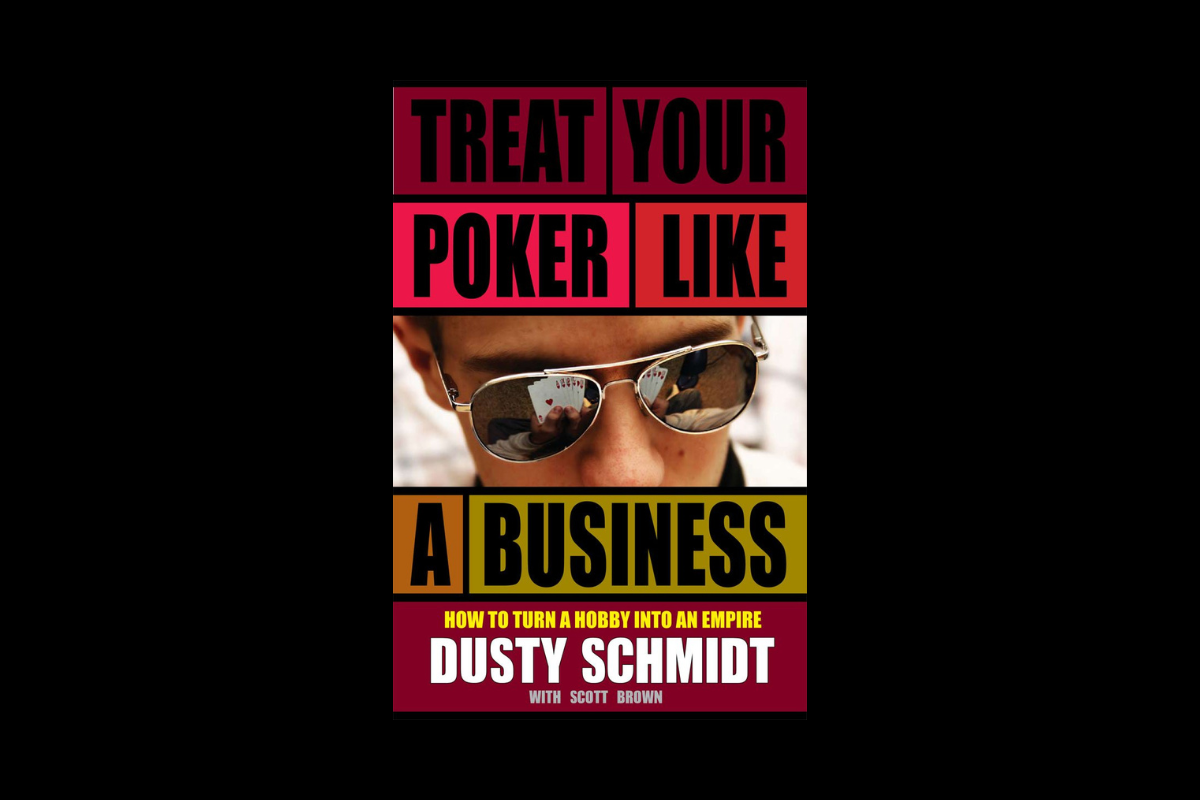
Here are chapters 11-15 of our Treat Your Poker Like A Business summary:
Chapter 11: Game Selection as a Core Edge
In chapter 11 of Treat Your Poker Like A Business, Dusty Schmidt reinforces that where you play is often more important than how you play.
Not All Games Are Equal
Many players obsess over hand strategy while ignoring:
-
Player pool quality
-
Seat position relative to weaker opponents
-
Time of day
-
Table dynamics
Schmidt frames game selection as a primary business decision. Sitting in a tough lineup reduces your hourly rate, even if you play well.
Protecting Your Hourly
The objective is not to prove you can beat strong players—it is to maximize profit per hour. That means:
-
Leaving marginally profitable tables
-
Avoiding unnecessary ego battles
-
Prioritizing games with clear skill gaps
He reiterates that smart professionals seek predictable edges, not challenges.
Chapter 12: Building Efficient Habits
In chapter 12 of Treat Your Poker Like A Business, Schmidt discusses habit formation as a driver of long-term consistency.
Structure Reduces Decision Fatigue
Successful poker professionals:
-
Develop consistent pre-session routines
-
Set volume targets
-
Track results methodically
-
Maintain predictable schedules
These habits remove unnecessary emotional variables from performance.
Efficiency Over Motivation
Relying on motivation is unreliable. Structured habits ensure productivity even when enthusiasm dips.
Schmidt emphasizes that business owners rely on systems—not mood—and poker should be treated the same way.
Chapter 13: Understanding Your Opponents’ Incentives
In chapter 13 of Treat Your Poker Like A Business, Schmidt examines how different players approach the game.
Recreational vs. Professional Motivations
Recreational players:
-
Play for entertainment
-
Chase excitement
-
Tolerate higher variance
Professionals:
-
Focus on expected value
-
Avoid unnecessary risks
-
Play for long-term income
Understanding why opponents play helps you anticipate their behavior.
Targeting Emotional Weakness
Players who are in the game for thrills often:
-
Chase losses
-
Overvalue hands
-
Refuse to fold
Schmidt suggests adjusting strategy based on motivation rather than assuming every opponent is playing optimally.
Chapter 14: Avoiding Burnout
In chapter 14 of Treat Your Poker Like A Business, Schmidt addresses sustainability.
The Grind Is Real
High-volume play can lead to:
-
Mental fatigue
-
Reduced decision quality
-
Emotional instability
-
Loss of motivation
Even profitable players can see win rates decline when burned out.
Managing Energy
Schmidt recommends:
-
Taking structured breaks
-
Maintaining physical health
-
Avoiding marathon sessions when fatigued
-
Monitoring focus levels honestly
Longevity matters more than short-term volume spikes.
Chapter 15: Confidence Without Delusion
In chapter 15 of Treat Your Poker Like A Business, Schmidt explores the balance between confidence and humility.
Productive Confidence
You need enough belief in your ability to:
-
Handle downswings
-
Move up when properly bankrolled
-
Execute aggressive plays
Without confidence, hesitation creeps into decision-making.
Guarding Against Overconfidence
However, inflated self-assessment leads to:
-
Premature shot-taking
-
Ignoring leaks
-
Underestimating opponents
Schmidt promotes grounded confidence based on data and volume—not emotion or short-term heaters.
Combined Core Message (Chapters 11-15)
Across these chapters, Schmidt expands the business framework beyond hand strategy:
-
Choose profitable environments deliberately
-
Build systems that promote consistency
-
Understand opponents’ motivations
-
Protect yourself from burnout
-
Balance confidence with realism
The theme remains consistent: sustained poker profitability is driven by structure, discipline, and intelligent decision-making—not emotion, ego, or short-term momentum.