
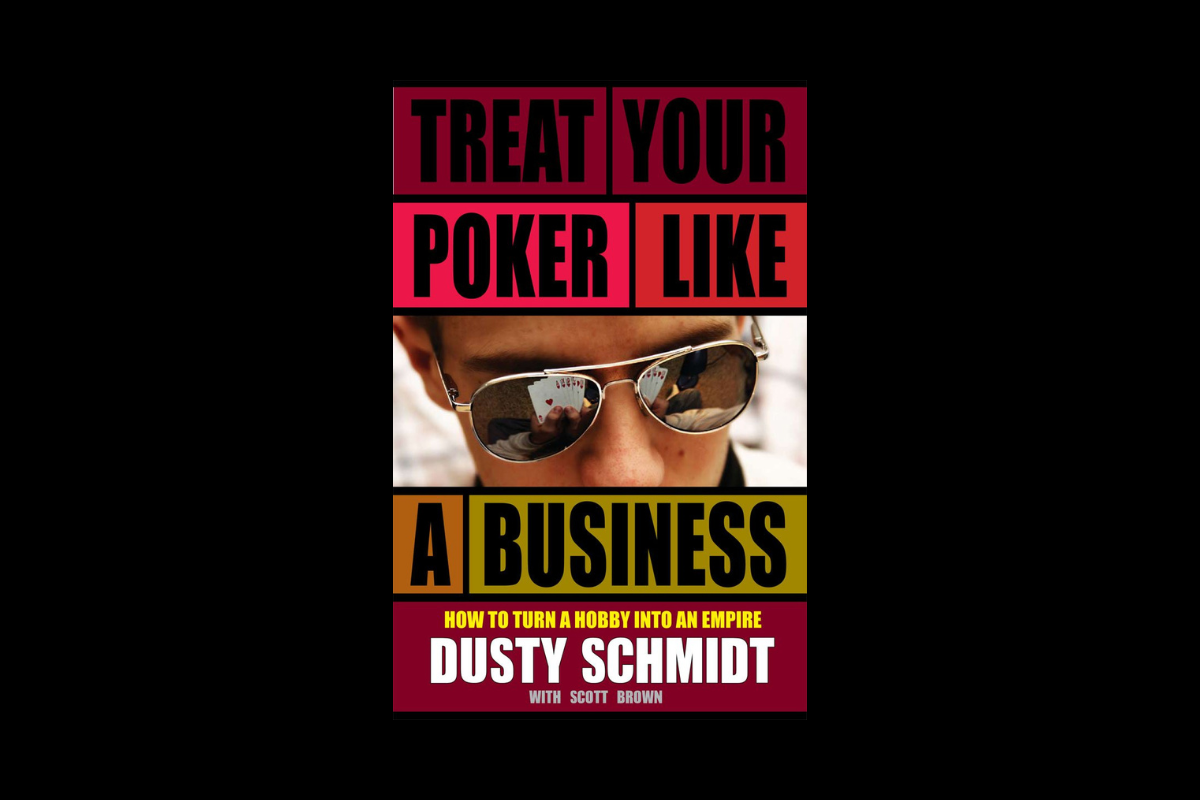
Here are chapters 21-25 of our Treat Your Poker Like A Business summary:
Chapter 21: Avoiding the Trap of Ego
In chapter 21 of Treat Your Poker Like A Business, Dusty Schmidt addresses one of the most expensive leaks in poker: ego.
Ego vs. Profit
Ego manifests in subtle ways:
-
Refusing to leave tough games
-
Battling strong regulars unnecessarily
-
Taking aggressive play personally
-
Trying to “prove” superiority
Schmidt emphasizes that poker is not about dominance or reputation—it is about extracting maximum profit.
Business-Minded Decisions
The disciplined professional:
-
Chooses soft games over difficult ones
-
Avoids ego-driven confrontations
-
Leaves marginally profitable or stressful tables
The goal is not to win arguments, but to maximize hourly return.
Chapter 22: Handling Downswings Rationally
In chapter 22, Schmidt revisits variance and downswings with a practical lens.
Downswings Are Inevitable
Even strong winners:
-
Experience prolonged losing stretches
-
Encounter statistically improbable runs
-
Feel emotional strain
Schmidt stresses that downswings are mathematical realities, not personal failures.
Proper Response to Losing Streaks
Rather than panic or overhaul strategy impulsively, players should:
-
Review hands objectively
-
Confirm they are making correct decisions
-
Maintain conservative bankroll standards
Overreaction during downswings is often more damaging than the downswing itself.
Chapter 23: Protecting Your Edge
In chapter 23, Schmidt discusses maintaining and expanding competitive advantage.
Continuous Improvement
Poker evolves. Players improve. Edges shrink.
To stay ahead:
-
Study regularly
-
Analyze databases
-
Track performance metrics
-
Identify recurring leaks
Complacency is expensive.
Table and Game Selection
Protecting your edge also means:
-
Avoiding games filled with strong professionals
-
Prioritizing weaker opponents
-
Understanding where your skill gap is greatest
Your profit margin depends on the gap between you and your competition.
Chapter 24: Balancing Aggression and Discipline
In chapter 24, Schmidt refines the concept of aggression.
Aggression With Structure
Aggression is profitable when:
-
It forces opponents into difficult decisions
-
It is supported by logic and range awareness
-
It is applied selectively
Recklessness disguised as aggression is costly.
Controlled Pressure
Schmidt reinforces:
-
Playing hands with intention
-
Applying pressure in mathematically favorable spots
-
Avoiding unnecessary variance
Aggression should serve your business model, not your emotions.
Chapter 25: Thinking Long-Term
In chapter 25 of Treat Your Poker Like A Business, Schmidt reinforces long-term thinking as the foundation of professional success.
The Long Horizon
Short-term results are noisy. True evaluation requires:
-
Large sample sizes
-
Multi-month or yearly performance tracking
-
Emotional detachment from daily results
Strategic Patience
Professional players:
-
Focus on cumulative profit
-
Avoid impulsive jumps in stakes
-
Build steadily over time
Schmidt returns to his core philosophy: sustainable growth beats dramatic spikes.
Combined Core Message (Chapters 21-25)
Across these chapters, Schmidt strengthens the mental and strategic infrastructure required for longevity:
-
Eliminate ego-driven decisions
-
Respond rationally to downswings
-
Guard and grow your edge
-
Apply disciplined aggression
-
Think in long-term timeframes
The overarching theme remains consistent: professional poker is less about brilliance and more about discipline, structure, and emotional maturity applied relentlessly over time.