
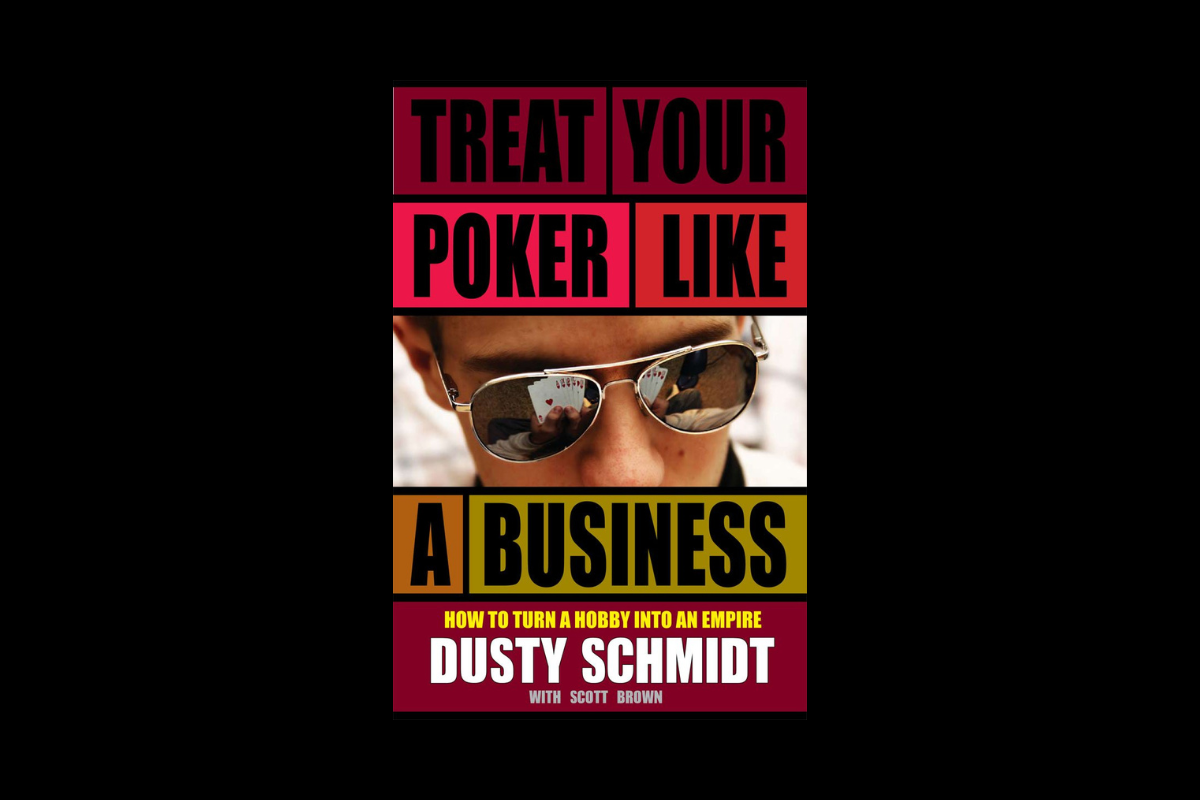
Here are chapters 26-30 of our Treat Your Poker Like A Business summary:
Chapter 26: Eliminating Distractions
In chapter 26 of Treat Your Poker Like A Business, Dusty Schmidt focuses on the importance of minimizing distractions to protect decision quality.
The Cost of Split Focus
Poker requires:
-
Sustained concentration
-
Emotional control
-
Rapid but accurate decision-making
Distractions such as television, excessive chatting, social media, or multitasking degrade performance and reduce win rate—even if the decline is subtle.
Professional Environment
Schmidt advocates treating poker like any serious occupation:
-
Create a clean, distraction-free workspace
-
Eliminate unnecessary noise
-
Avoid sessions when mentally fatigued
Small drops in focus compound significantly over large sample sizes.
Chapter 27: Avoiding Burnout
In chapter 27, Schmidt discusses sustainability and preventing mental exhaustion.
The Risk of Overplaying
Grinding long hours without breaks may seem productive but often leads to:
-
Poor decisions late in sessions
-
Emotional leaks
-
Reduced long-term profitability
Sustainable Volume
The goal is consistency, not exhaustion. Schmidt recommends:
-
Structured session lengths
-
Planned days off
-
Awareness of mental fatigue
A sustainable pace produces better long-term results than aggressive overextension.
Chapter 28: Emotional Detachment from Money
In chapter 28 of Treat Your Poker Like A Business, Schmidt addresses the psychological relationship players have with money.
Chips as Tools, Not Rent Payments
When players emotionally attach real-world meaning to each pot, fear and hesitation enter decision-making.
Professional players must:
-
View chips as business inventory
-
Make mathematically correct decisions regardless of pot size
-
Detach from short-term monetary swings
Decision Quality Over Dollar Amounts
The correct play remains correct whether the pot is small or large. Emotional reactions to dollar amounts create inconsistency.
Schmidt reinforces that bankroll management provides the cushion needed to think clearly.
Chapter 29: Measuring Performance Objectively
In chapter 29, Schmidt stresses the importance of measurable metrics.
Track Everything
Serious players should:
-
Monitor win rate (bb/100)
-
Track total hands played
-
Review positional performance
-
Analyze specific leaks
Data removes guesswork and prevents emotional misinterpretation of results.
Large Sample Sizes
Short-term heaters or downswings distort perception. True skill reveals itself over:
-
Tens of thousands of hands
-
Long-term tracking
Objective measurement reinforces rational thinking.
Chapter 30: Commitment to the Process
In chapter 30 of Treat Your Poker Like A Business, Schmidt returns to one of his central themes: process over outcomes.
Process-Oriented Mindset
Results fluctuate. The controllable variable is:
-
Quality of decisions
-
Volume of disciplined play
-
Continuous improvement
Professionals commit to:
-
Studying consistently
-
Following bankroll rules
-
Playing only when mentally prepared
Long-Term Professionalism
Shortcuts do not exist in poker. Sustainable success requires:
-
Patience
-
Emotional discipline
-
Structural consistency
The player who commits to the process will outperform those chasing quick breakthroughs.
Combined Core Message (Chapters 26-30)
Across these chapters, Schmidt emphasizes professional structure:
-
Remove distractions
-
Avoid burnout
-
Detach emotionally from money
-
Measure performance objectively
-
Commit fully to disciplined processes
The message continues to reinforce his overarching philosophy: poker profitability is built through discipline, structure, and long-term consistency—not intensity, ego, or short-term results.