
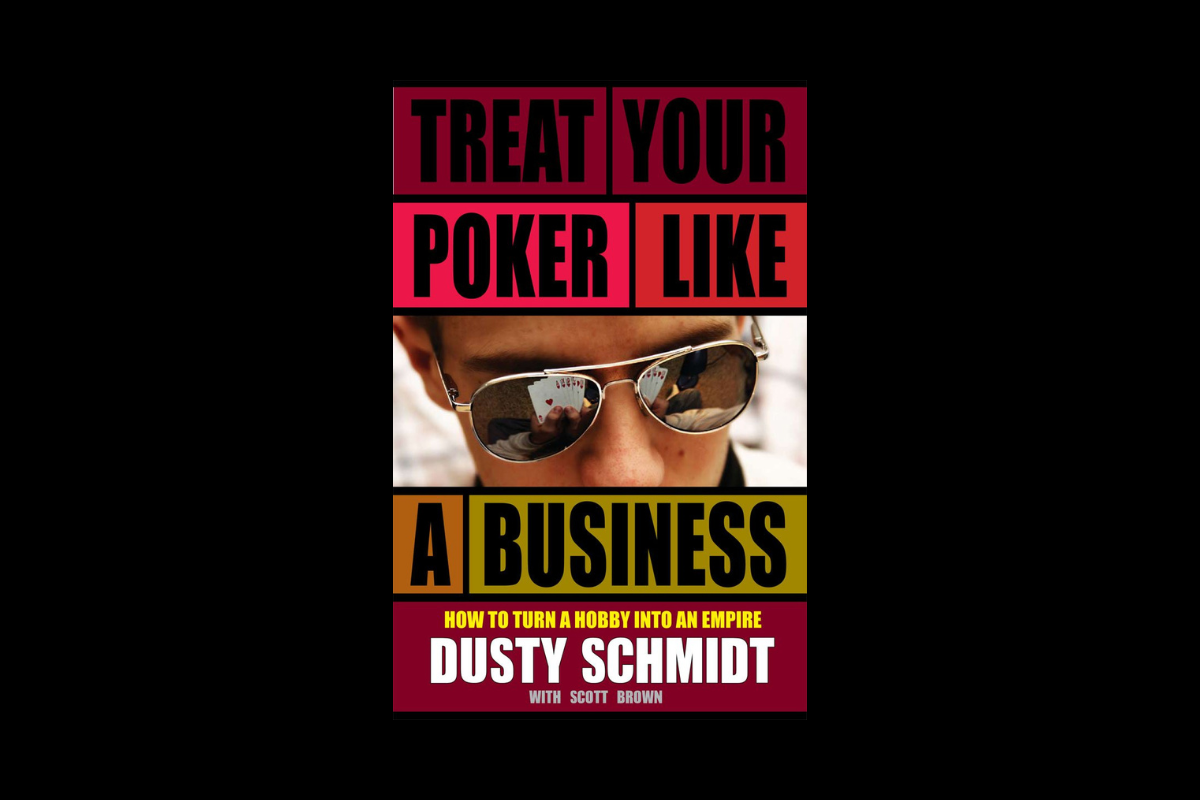
In the introduction of Treat Your Poker Like A Business, Dusty Schmidt presents poker not as a game of ego or bravado, but as a disciplined, profit-driven enterprise built on business fundamentals.
A Different Kind of Poker Book
Schmidt makes it clear that much of the book focuses not on flashy tactics or psychological warfare at the table, but on operational discipline. The early chapters emphasize structure, accountability, and financial thinking. His central premise is simple: poker is a vehicle for making money, and it should be approached with the same seriousness as any other business.
Rather than centering on dramatic plays or emotional momentum, he argues that long-term success depends on removing ego and prioritizing profitability. For him, business principles are not secondary to poker skill—they are foundational.
Filling a Knowledge Gap
Schmidt identifies what he sees as a disconnect in the poker world: many players improve their technical skills but lack the systems to turn those skills into consistent income. Training sites may sharpen gameplay, but they rarely teach monetization, scaling, or operational management.
He compares modern poker players to professional athletes before the rise of agents—talented but undercompensated because they lack business structure. Since online poker was still developing at the time of writing, he argues that players who understand efficiency, cost control, and growth strategies can gain a major edge. Some of the most significant contributors to overall win rate, he suggests, occur outside of actual gameplay.
From Novice to Professional
Schmidt shares his unconventional path into poker. He began without knowing how to play and lacked advanced mathematical or technical ability. What he did possess was business experience, gained through years working in his family’s distribution company. There, he learned about margins, inventory management, growth strategy, and cash flow—skills that later became central to his poker career.
Despite helping expand the family business, he was unhappy in that environment. His early passion was golf, and he had once been a highly ranked junior player with aspirations of reaching the PGA Tour. A sudden heart attack at age 23 disrupted those ambitions and left him financially strained.
Discovering Online Poker
Introduced to online poker through a friend, Schmidt was struck not by the excitement of the game, but by its financial potential. Large online pots and deposit bonuses stood out as opportunity. With limited funds and mounting expenses, he approached poker pragmatically—initially aiming simply to break even while clearing bonuses.
He committed fully, enduring intense volume and financial hardship. There were periods where nearly all his money was online, and daily life was financially tight. However, he focused on sustainability and incremental growth.
Scaling with Discipline
As his results improved, Schmidt maintained a conservative growth strategy. He preserved a significant bankroll, avoided unnecessary tournament variance, added tables gradually, and tracked performance metrics carefully. His background in business shaped these decisions.
Over time, he built a highly efficient operation—playing large volume across multiple tables and generating consistent income. He attributes this not just to improved skill, but to disciplined scaling and structured management. For him, poker ability and business execution are inseparable.
Freedom Through Structure
Schmidt emphasizes that his entry into poker was not driven by natural talent, but by recognizing a viable business model. The appeal lay in independence: controlling his schedule, working from home, and being accountable only to himself.
He argues that players must think like CEOs. Profit margins, growth pacing, risk management, and long-term sustainability should take precedence over reputation or short-term excitement. Internet credibility does not pay bills—sound management does.
The Larger Goal
While he expresses confidence that the strategic advice in the book will improve readers’ games, Schmidt suggests his broader aim is more significant. He hopes readers adopt a business mindset that leads not only to poker profits, but to greater control and stability in their lives.
The introduction frames the book as both a strategic manual and a blueprint for turning poker skill into financial independence through disciplined execution.