
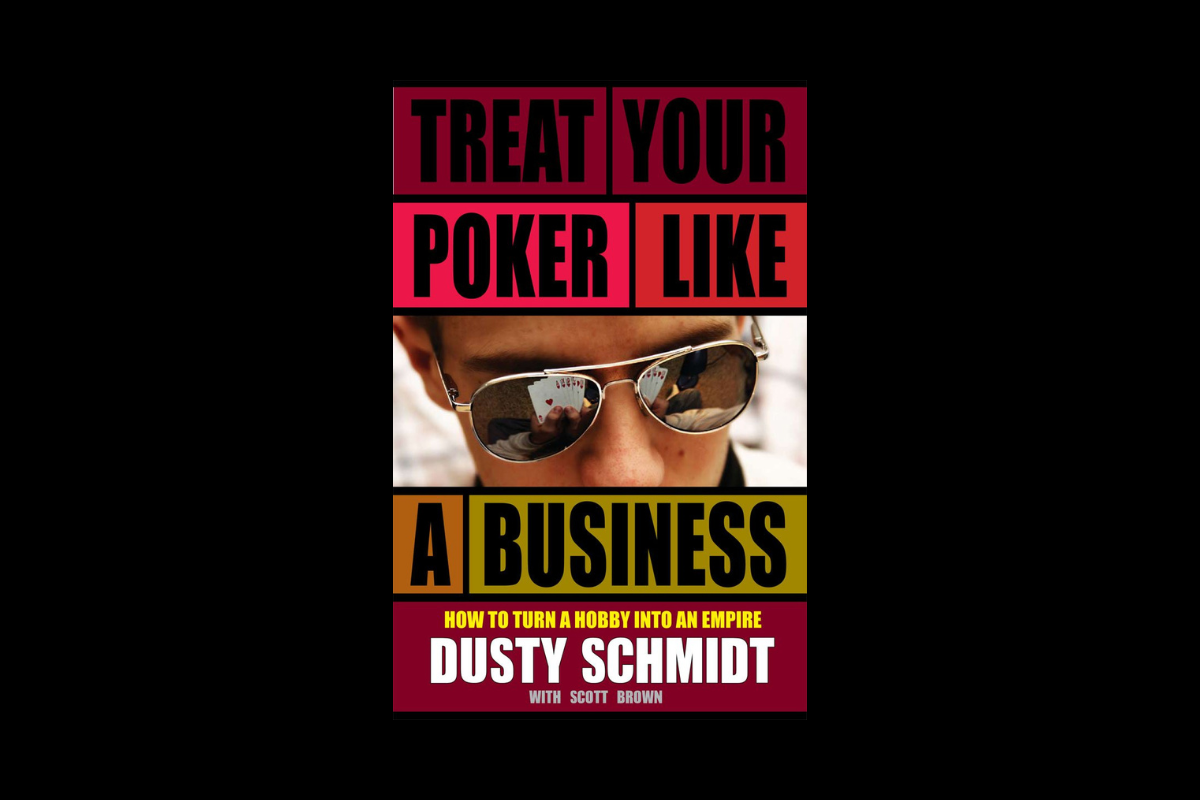
Here are chapters 36-40 of our Treat Your Poker Like A Business summary:
Chapter 36: Taxes and Professional Responsibility
In chapter 36 of Treat Your Poker Like A Business, Dusty Schmidt reinforces that professional poker players must treat tax obligations as a core business responsibility.
Separate Business From Personal Finances
Schmidt stresses:
-
Keeping detailed financial records
-
Tracking winnings and losses accurately
-
Separating bankroll funds from tax liabilities
Poker income is not fully spendable income. A portion belongs to tax authorities and must be set aside immediately.
Planning for Tax Season
Failure to account for taxes:
-
Creates unnecessary stress
-
Disrupts bankroll stability
-
Delays upward movement in stakes
Professional discipline includes reserving funds for taxes before considering bankroll growth.
Chapter 37: Taxes, Record Keeping and Their Impact on Bankroll
In chapter 37, Schmidt expands on record keeping and its strategic implications.
Dual-Account System
He recommends:
-
One account for poker withdrawals
-
One separate account strictly for taxes
This prevents accidental spending of funds owed.
Bankroll Calculations Must Include Taxes
If bankroll requirements demand 100 buy-ins to move up in stakes, taxes owed must be subtracted before determining eligibility. Apparent growth may be misleading if tax liabilities are ignored.
Schmidt acknowledges that this approach may seem conservative, but it ensures long-term survival and stability.
Chapter 38: Don’t Listen to the Critics
In chapter 38 of Treat Your Poker Like A Business, Schmidt addresses criticism and online culture.
Success Attracts Resistance
As players improve:
-
Opponents resent losses
-
Critics question unconventional methods
-
Forums amplify negativity
Schmidt’s methodical, volume-based approach drew skepticism from peers who favored flashier styles.
Stay the Course
He advises:
-
Avoid engaging in online arguments
-
Block distracting chat
-
Focus on profitability over reputation
Professional success often conflicts with mainstream expectations. Discipline requires ignoring outside noise.
Chapter 39: Must Reads
In chapter 39, Schmidt evaluates poker education.
Time Is an Investment
Reading poker books:
-
Consumes valuable playing time
-
Must justify its opportunity cost
Only high-quality material written by long-term winners should be considered.
Specificity Matters
Players should:
-
Study material specific to their format (cash vs. tournament)
-
Avoid crossover strategy confusion
-
Learn from credible, proven professionals
Efficient study aligns directly with current goals and games.
Chapter 40: How Will I Know I’m Good Enough?
In chapter 40 of Treat Your Poker Like A Business, Schmidt addresses the question of turning professional.
Define Success Carefully
Early in his life, Schmidt defined success as financial independence. Over time, his benchmarks evolved. He emphasizes that definitions of success should be periodically reassessed.
Avoid Premature Career Decisions
Short-term heaters can distort confidence. Schmidt warns against:
-
Quitting jobs after brief winning streaks
-
Misinterpreting variance as skill
Practical Benchmarks
For cash-game players, he suggests:
-
Beating at least $0.50/$1 stakes
-
Sustaining approximately 4 big blinds per 100 hands
-
Maintaining this win rate over roughly 100,000 hands
Tournament players require a longer track record due to higher variance—often a year or more of consistent profitability.
Lifestyle Considerations
Personal financial obligations vary. A single person with low expenses requires far less income than someone supporting a family in a high-cost area.
The core message: humility and patience are essential before transitioning to full-time professional poker.
Combined Core Message (Chapters 36-40)
Across these chapters, Schmidt finalizes the professional framework:
-
Treat taxes as non-negotiable business expenses
-
Maintain precise financial records
-
Ignore critics and ego battles
-
Study efficiently and selectively
-
Set objective, conservative benchmarks before going pro
The consistent principle remains: professional poker is not built on bold leaps or public validation, but on disciplined structure, financial responsibility, and long-term performance measurement.