
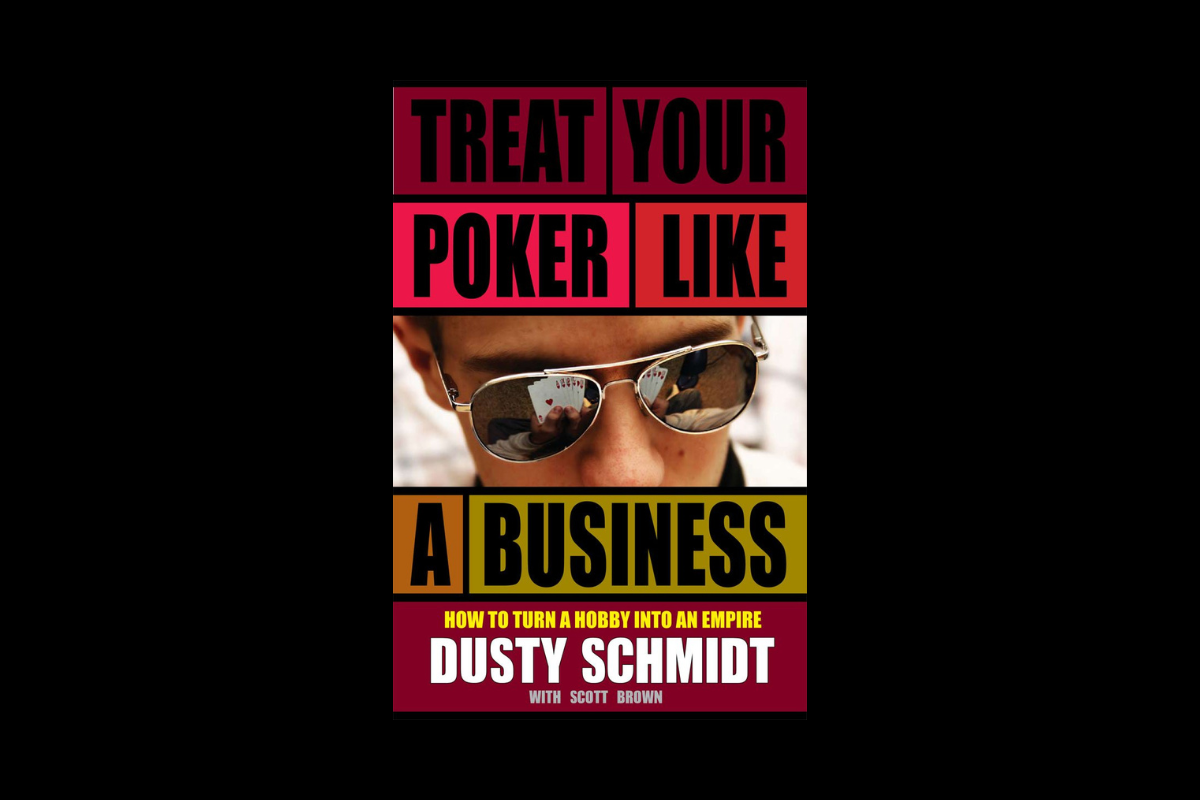
Here are chapters 30-35 of our Treat Your Poker Like A Business summary:
Chapter 30: Commitment to the Process
In chapter 30 of Treat Your Poker Like A Business, Dusty Schmidt reinforces that long-term success is rooted in disciplined adherence to process rather than emotional reaction to results.
Process Over Outcomes
Winning players:
-
Focus on decision quality
-
Follow bankroll rules without exception
-
Track performance methodically
-
Avoid emotional overreaction to short-term swings
Results fluctuate. Process is controllable.
Sustainable Professionalism
Schmidt emphasizes patience and structural consistency as non-negotiable pillars of long-term profitability.
Chapter 31: Structuring Your Poker Business
In chapter 31, Schmidt frames poker operations in traditional business terms.
Operational Structure
Professional players must:
-
Maintain accurate financial records
-
Separate bankroll from personal funds
-
Allocate funds for reinvestment
Poker is treated as a small enterprise that requires structure, discipline, and reinvestment strategy.
Reinvestment Strategy
Moving up in stakes is not impulsive. It occurs only when:
-
Bankroll thresholds are safely met
-
Performance metrics justify advancement
-
Emotional stability is intact
Expansion without infrastructure invites collapse.
Chapter 32: Evaluating Risk Properly
In chapter 32, Schmidt clarifies the concept of risk management.
Risk vs. Recklessness
Poker inherently involves risk, but professionals:
-
Quantify risk
-
Limit exposure
-
Avoid catastrophic loss
He draws a distinction between calculated aggression and emotionally driven gambling.
Downside Protection
Conservative bankroll management:
-
Protects against ruin
-
Reduces stress
-
Enables clearer thinking
The objective is survival first, growth second.
Chapter 33: Maintaining a Competitive Mindset
In chapter 33, Schmidt examines competitiveness without ego.
Competitive Discipline
Professional competitiveness involves:
-
Continuous improvement
-
Study and database analysis
-
Honest self-assessment
It does not involve:
-
Ego battles
-
Emotional revenge
-
Public validation
Quiet Confidence
True competitive strength is internal. The most profitable players rarely need recognition—they prioritize consistent performance over reputation.
Chapter 34: Tournaments or Cash Games?
In chapter 34, Schmidt makes a clear case for specializing in cash games.
The Variance Problem in Tournaments
Tournament structures:
-
Increase blinds over time
-
Force short-stack all-in situations
-
Increase reliance on luck
While tournaments offer large headline payouts, the probability distribution is highly volatile.
Predictability and Volume
Cash games:
-
Allow unlimited repetition
-
Maintain consistent stack depths
-
Reduce the impact of forced variance
Schmidt argues that skill expresses itself more reliably in cash games, making them more suitable for a business model focused on steady income.
Chapter 35: Equipping Your Computer for Maximum Profit
In chapter 35 of Treat Your Poker Like A Business, Schmidt discusses the role of tools and infrastructure.
Return on Investment
Equipment upgrades (such as faster computers or better monitors):
-
Increase multi-tabling capacity
-
Improve efficiency
-
Pay for themselves quickly
He treats hardware and software purchases as business investments.
Analytical Software
Schmidt strongly advocates for using tracking software to:
-
Monitor personal performance
-
Analyze opponent tendencies
-
Track income for tax purposes
However, he cautions against over-reliance. Data informs decisions, but experience and instinct remain critical components.
Combined Core Message (Chapters 30-35)
Across these chapters, Schmidt transitions fully into operational professionalism:
-
Commit to process discipline
-
Structure poker as a formal business
-
Quantify and manage risk
-
Compete without ego
-
Prefer consistent cash-game models
-
Invest in tools that improve efficiency
The unifying theme remains consistent with the entire book: sustainable poker success depends not on brilliance or boldness, but on structure, discipline, and long-term execution.