
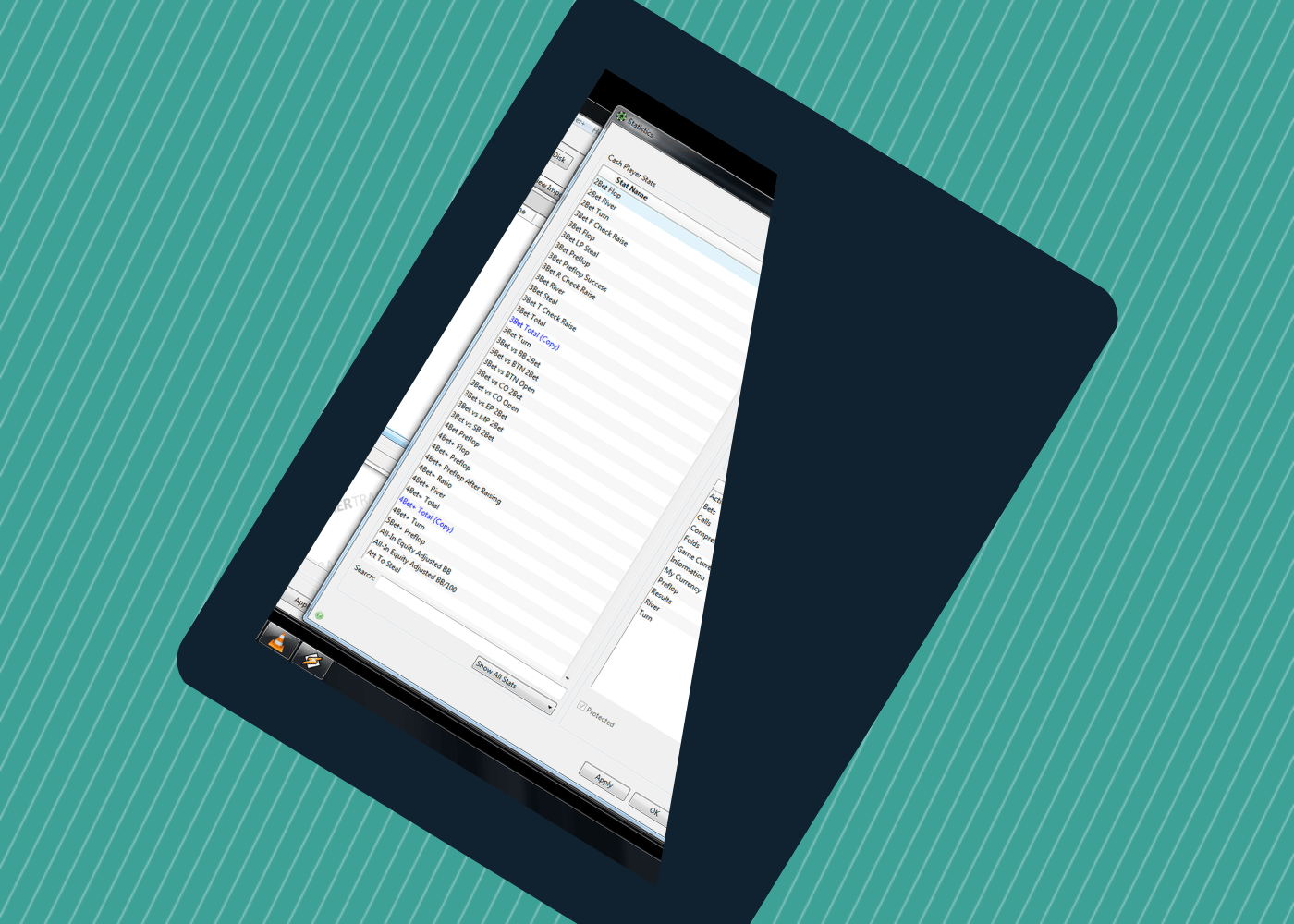
Let’s talk about something that makes online poker feel like a video game: the HUD.
If you play online poker and aren’t using a HUD, you’re giving up an edge. You are basically playing blind whole many of your opponents have a huge list of stats showing them how you play.
If you’re new to using a HUD in online poker or you’d simply like some more info on it, you’ve come to the right place. In this article we will explain every important HUD stat and show you what they mean.
What Is a HUD?
A HUD (Heads-Up Display) is a tool used in online poker. It shows real-time statistics about your opponents based on hands you’ve played with them. The info pops up right next to each player’s name at the table.
The HUD collects hand histories and turns them into stats. Think of it like a digital notebook that remembers everything for you. Instead of guessing what kind of player someone is, you can just look at the numbers.
You’ll see stats like how often someone raises preflop, how aggressive they are on the turn, and how often they fold to a 3-bet. These are called “HUD stats.” They help you make better decisions.
Why Use a HUD?
Online poker is fast. You might be playing four tables at once. Or eight. Or twelve if you’re a maniac. There’s no time to take notes on every player. A HUD does the heavy lifting.
Even if you’re only playing one table, remembering everyone’s tendencies is tough. The HUD remembers everything. It’s like your poker brain’s best friend and can do wonders for your winrate.
And here’s the real deal: HUDs make you money. They help you exploit weaker players and avoid the crushers. You don’t need to rely on “feel.” You’ve got data.
The Most Important HUD Stats You Need to Know
There are tons of HUD stats out there. But most players don’t use all of them. In fact, you can get a lot done with just a handful. Let’s go over the basics:
1. VPIP (Voluntarily Put $ in Pot)
This tells you how often a player voluntarily puts money into the pot preflop (excluding blinds). It’s a percentage.
- A player with a VPIP of 10% is super tight—they’re only playing premium hands.
- A VPIP of 30% or more? That’s a loose player who likes to get involved with a lot of hands.
It’s one of the most important stats. High VPIP = loose. Low VPIP = tight.
2. PFR (Pre-Flop Raise)
This is how often a player raises pre-flop (not just calls). Combine this with VPIP for a lot of insight.
-
VPIP 25 / PFR 5 means a passive player. They call a lot but don’t raise much.
-
VPIP 25 / PFR 23 means they’re aggressive—they play a lot of hands and raise them too.
Understanding the VPIP/PFR gap is like seeing someone’s personality in numbers.
3. 3-Bet
This stat shows how often a player makes the third bet pre-flop (someone raises, and they re-raise). It’s one of the best indicators of aggression.
-
Low (like 3%): They probably only 3-bet with aces, kings, and queens.
-
High (10% or more): They like to pressure you, maybe even with hands like A-J, 7-7, or suited connectors.
Knowing this lets you make better decisions when they come over the top.
4. Fold to 3-Bet
This one’s gold if you’re the one doing the 3-betting. If a player folds to 3-bets 80% of the time, you’ve got a prime target for bluffing. But if they only fold 20%, you might want to tighten up.
5. Aggression Factor (AF)
AF = (Bet + Raise) / Call. It measures how aggressive someone is post-flop.
-
AF under 1.0: Passive—they prefer to check and call.
-
AF over 3.0: Aggressive—they’re betting and raising often.
Use this to figure out if someone’s likely to barrel the turn or river.
6. C-Bet – Continuation Bet
This is how often someone follows up a pre-flop raise with a bet on the flop.
-
If someone C-bets 80% of the time, they’re aggressive and might not always have a hand.
-
If they only C-bet 40%, they probably need to hit the flop to bet.
Knowing this can help you decide whether to float the flop or fight back.
7. Fold to C-Bet
Are they giving up when they miss the flop? If they fold to C-bets a lot, you can punish them with bluffs. If they rarely fold, maybe slow down unless you have something solid.
What the Numbers Tell You
Here’s where it gets fun. Once you know what the numbers mean, you start seeing patterns. You don’t just see “Joe123.” You see:
Joe123: 34/7, 3-Bet 2%, Fold to 3-Bet 80%, AF 1.2
What does that tell us?
-
He plays 34% of hands (loose).
-
But only raises 7% (passive).
-
He almost never 3-bets.
-
Folds to 3-bets often.
-
Not aggressive postflop.
This guy is your target. Raise him. 3-bet him. C-bet him. He’s probably not fighting back unless he has a monster.
Compare that to:
GrinderPro: 21/18, 3-Bet 6%, Fold to 3-Bet 45%, AF 3.5
Tighter, more aggressive, tougher to play against. You’ll need to tighten up and play solid poker against this type of player.
A Sample HUD Layout (And How to Use It at the Table)
Here’s how a simple HUD might look next to a player’s name:
VPIP / PFR / 3B / AF / C-Bet / Fold to C-Bet
23 / 18 / 6 / 2.5 / 72 / 48
So, what does this tell us?
-
VPIP 23 and PFR 18 means they’re decently aggressive—selective, but not nitty.
-
3-bet of 6% shows they’re capable of squeezing or putting pressure on you pre-flop.
-
Aggression factor of 2.5 is a balanced aggressor.
-
C-bet 72%? They’re firing the flop a lot.
-
Fold to C-bet 48%? About average—don’t assume they’re folding without a fight.
From this, we might say: this player is solid, aggressive, but not insane. Respect their raises, but don’t be afraid to play back when you have position or a read.
How Many Hands Do You Need for Reliable HUD Stats?
Stats aren’t useful if you only have 10 hands on someone. Variance is too high. You need a bigger sample size.
Here’s a rough guide:
-
VPIP/PFR: Useful after 30-50 hands.
-
3-Bet/Fold to 3-Bet: Better after 100+ hands.
-
Postflop stats (C-Bet, Fold to C-Bet, AF): 200+ hands to be reliable.
But you can still use trends. If you’ve played 30 hands and someone’s already VPIPing 70%, you probably don’t need to wait for more data.
Don’t Just Look — Interpret
A HUD is only as good as your ability to use it. You need context.
If someone is 3-betting 10%, but it’s only from the button, that’s different than someone 3-betting from UTG.
Some HUDs show positional stats. These are gold. You can see how someone plays from each seat. Very useful for deciding whether to defend your blind or 4-bet a steal.
Also, always look at the sample size. Don’t make big decisions based on tiny samples.
Other Useful HUD Stats
If you want to go deeper, there are tons of other stats. Here are a few good ones:
-
Steal %: How often a player raises from late position. Helps you defend your blinds better.
-
Fold to Steal: How often someone folds their blind. Easy money if they fold a lot.
- 4-Bet %: How often they respond to a 3-bet with yet another raise.
-
WTSD (Went to Showdown): High number = calling station. Low number = folds too much.
-
W$SD (Won $ at Showdown): If this is low, they go to showdown with bad hands.
You don’t need all these at first. Start with the basics. Add more as you get comfortable.
Exploiting Different Player Types Using HUD Data
Now let’s put it into practice. Based on HUD stats, you’ll start to recognize patterns and label players. Here are a few examples:
The Nit
-
VPIP: 10
-
PFR: 8
-
3-Bet: 2
-
Fold to C-Bet: 70
They play like a turtle with a poker face. Bluff them. Steal their blinds. Just don’t get into huge pots unless you’ve got a monster.
The LAG (Loose Aggressive)
-
VPIP: 30
-
PFR: 28
-
3-Bet: 12
-
C-Bet: 80
These guys are wild. They put pressure on constantly. Fight back with solid hands and position, and trap when you can. Don’t try to out-bluff them unless you’ve got the nerve and the plan.
The Calling Station
-
VPIP: 40
-
PFR: 10
-
AF: 0.8
-
WTSD: 35
They love to call but hate folding. Value bet them relentlessly. Don’t bluff them. Ever.
Ethics, Rules, and Online Poker Sites
One last thing: not all sites allow HUDs. If you’re playing on PokerStars, HUDs are allowed for cash games, but many sites (like GGPoker) have banned them entirely.
Always check the rules of the site you’re on. Using a HUD where it’s not allowed could get you banned.
And hey—just because something is legal doesn’t mean it’s always fair. Some people see HUDs as creating an uneven playing field. Personally? I think knowledge is power, and as long as you’re not breaking rules, use the tools at your disposal.
Best HUD Software Options
If you’re new to HUDs, here are a few popular ones:
-
PokerTracker 4
-
Hold’em Manager 3
-
Hand2Note
-
DriveHUD
All of them do the same basic thing: collect hands, display stats. Some are better at certain things (like graphs or custom reports), but any will get the job done.
Most sites allow HUDs, but not all. Some sites ban them or limit them (like GGPoker or PokerBros), so always check.
Final Thoughts
HUDs aren’t magic. They won’t turn you into Phil Ivey overnight. But they give you valuable information — and in poker, information is power.
Start simple. Learn what VPIP and PFR mean. Pay attention to 3-bet tendencies and fold stats. Then add more as you go.
And remember: the point isn’t just to collect data. The point is to exploit it.
If someone folds too much, bluff more. If someone never folds, value bet harder. If someone’s aggressive, trap them.
Poker is a game of patterns, and a HUD helps you see them faster.
So plug it in. Learn the numbers. And let the data work for you.
Because in online poker, you’re not just playing cards — you’re playing people.