
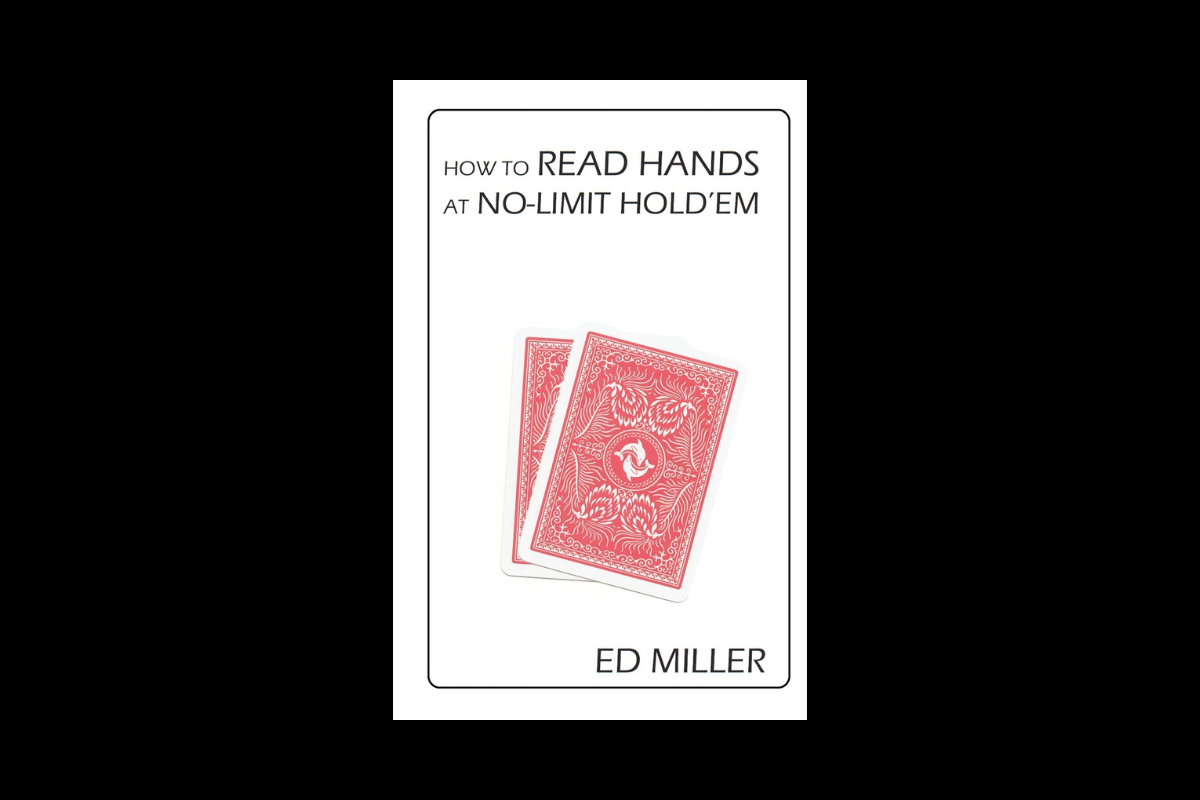
In chapter 9 of How To Read Hands At No-Limit Hold’em, Ed Miller explains that getting raised is unpleasant not just because it usually signals strength, but because it inflates the pot and forces stack-level decisions earlier, when ranges are wider and the remaining board cards can still change everything. Compared to clean “bet–call” lines, early raises deny you information and push you into higher-variance spots.
He emphasizes that you can still use hand ranges to respond intelligently—just with more uncertainty and a greater need to weigh probabilities.
Flop Raises: The Most Common Trouble Spot
Miller calls flop raises especially tricky at small stakes because opponents are most likely to “get out of line” on the flop compared to later streets, and because you typically have three viable responses:
-
Fold
-
Reraise with a stack-off plan
-
Call and reassess on the turn
He offers several guiding ideas for constructing flop-raising ranges.
Rule of Thumb 1: Most Flop Raises Come From “Calling Hands”
A common small-stakes pattern is that people raise hands that many others would simply call with—strong made hands, strong draws, and protection-style raises. True “pure bluffs” that would otherwise fold are less common than theory would suggest.
Rule of Thumb 2: Account for Slowplays
Some opponents frequently slowplay monsters on the flop, which means:
-
A flop raise does not always represent the top of their range.
-
A flop call does not rule out very strong hands.
So when a player raises, you need to ask which monsters they might normally not raise.
Rule of Thumb 3: Use a “Fudge Factor”
When your best guess produces a very narrow raising range, add a realistic allowance for weird plays and fringe hands. The fewer obvious value hands exist, the more important this uncertainty becomes—because players sometimes raise strangely even when it doesn’t make much sense.
Rule of Thumb 4: Card Removal Matters More Than Usual
When facing a raise, you often hold a decent hand yourself, and your cards reduce the combinations of key value hands or key bluffs. That can materially shift the odds in close decisions.
Two Contrasting Examples: Tight Regular vs Aggressive Fish
Dry-board raise from a non-aggressive regular
Miller shows that on dry boards with few draws, a raise from a typical non-aggressive regular often heavily weights toward strong value hands. Even if you allow for some bluffs or oddball raises, your medium-strength hand can still be far behind the overall range—making folds correct more often than many players want to admit.
A secondary point: calling “to see what happens” is often just delaying the inevitable if you expect to fold on most turns anyway.
Monotone flop shove from an aggressive fish
On three-of-a-suit flops, many players fear that a raise “must be a flush,” but Miller argues that against aggressive opponents—especially those who play lots of suited hands—flush draws can be nearly as common as made flushes, with additional value hands (two pair, sets, overpairs, top pair) also possible.
This makes strong made hands like sets generally happy to play for stacks against the range, even though they sometimes run into the made flush.
Tip #21 (core monotone insight)
Versus a fairly aggressive flop-raiser on a monotone board, expect a large portion of their raising range to be flush draws (or hands with the key high card of the suit), not only made flushes.
“Rapid Fire” Raise Reading: Board Texture Shapes the Raise Range
Miller then runs through multiple flop textures to illustrate how the mix changes:
-
Dry high-card boards: raises often skew toward strong top-pair-plus and strong draws when available.
-
Paired boards: many players raise vulnerable pairs and bluffs while slowplaying trips/full houses, creating opportunities to “catch people playing backward.”
-
Low, connected boards: callers often have many pocket pairs, and some players respond by raising overpairs aggressively because the board looks dangerous.
-
Monotone boards: the number of possible flush combos depends on the ranks/structure of the flop (low-card monotones allow more plausible suited holdings than middle-card monotones, and ace-high monotones remove or reshape many suited possibilities).
The point isn’t to memorize exact lists, but to internalize how texture changes what’s plausible.
Turn and River Raises: Default to Respect
Miller’s general small-stakes guideline is blunt: turn and river raises (especially large ones) are usually value-heavy and often near the top of the range. Players rarely run big semi-bluff raises on the turn, and river bluff-raises are even rarer.
So absent strong evidence, treat turn/river raises as narrow ranges dominated by two pair or better.
The Exception: Null Ranges
Miller introduces a key concept for catching rare bluff-raises:
Null Range
A “null range” occurs when, after you analyze the line, no reasonable value hand actually fits the action. If your opponent’s value range collapses to nothing, then whatever aggression remains must come disproportionately from:
-
draws,
-
weird lines,
-
and “fudge factor” bluffs.
He warns not to overuse this idea—sometimes the “only hand that makes sense” is exactly what they have—but if strong hands truly don’t match the line, a raise can represent opportunism rather than value.
Discounting Combos: Modeling Uncertainty Precisely
Because range-building is inexact, Miller suggests a practical math hack:
If you’re unsure whether a specific hand belongs in the range (or whether it takes a certain action), include it but count fewer combinations to reflect partial likelihood.
Tip #22
Discount combinations for fringe hands instead of making all-or-nothing assumptions. This keeps your probability estimates realistic without pretending you have perfect reads.
Polarized Betting Ranges and the Bluff-Catching Range
The chapter closes by tying raises and aggression to a broader concept:
Calling ranges tend to be “top X%”
People generally call with their better hands in a relatively continuous way.
Betting ranges become polarized over time
As streets progress, many players:
-
stop betting medium-strength hands to reach showdown,
-
continue betting very strong hands for value,
-
and occasionally bet very weak hands as bluffs.
This produces a crucial river concept:
Bluff-Catching Range
When facing a bet, many hands that feel very different (top pair vs a modest pocket pair) can become nearly equivalent if:
-
they almost never beat the opponent’s value range, and
-
they mostly win only when the opponent is bluffing.
Miller stresses that small-stakes players do not bluff enough, especially on multi-street lines. So when you realize your hand sits in the bluff-catching range, folding is often the disciplined, profitable choice—particularly when the opponent’s line suggests strong value and the bluff pool is narrow.
He also notes that busted straight draws are sometimes easier to bluff-catch against than busted flush draws, because straight-draw bluffs constrain the ranks an opponent can hold, while busted flush-draw “bluffs” can still contain high cards or paired hands that beat very weak bluff-catchers.
Chapter 9 Takeaways
-
Flop raises are common, messy, and force higher-variance decisions with less-defined ranges.
-
Most small-stakes flop raises come from hands that could have called; pure bluff-raises are rarer.
-
Incorporate slowplays, a fudge factor, and card removal when building raising ranges.
-
Against aggressive players on monotone flops, draws can be as common as made flushes—don’t assume “flush every time.”
-
Turn and river raises are usually strong at small stakes unless your analysis produces a null range.
-
Use discounted combinations to model uncertainty.
-
Betting ranges polarize as hands progress; identify when your holding is “just” a bluff catcher, and remember that most small-stakes opponents under-bluff, especially on triple-barrel lines.