
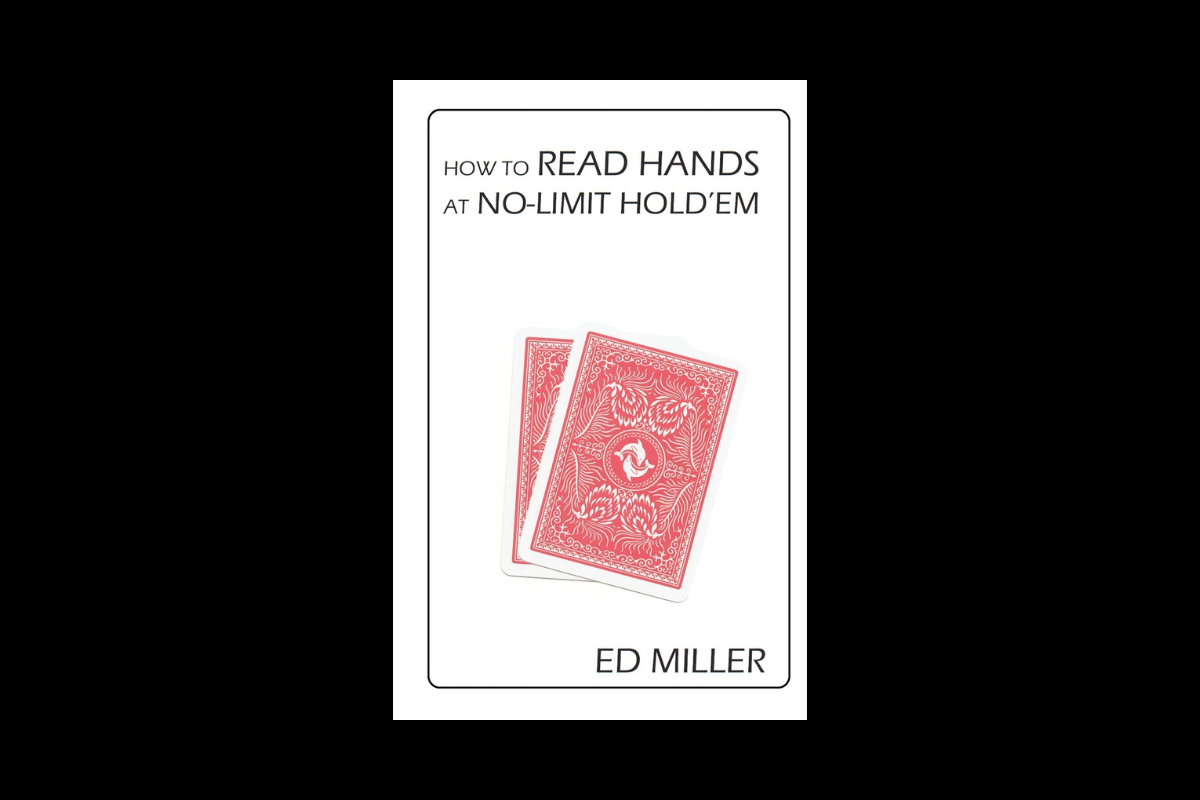
In chapter 8 of How To Read Hands At No-Limit Hold’em, Ed Miller argues that aggressive actions are often hard to decode in isolation, because a bet can represent many things (value, protection, draws, or bluffs). The practical shortcut is to work backward: identify the hands your opponent would not bet, then see what’s left.
He notes that most players check more often than they bet across a hand, and that the “missing bets” reveal structure—especially because many players routinely check medium-strength hands.
The Five Common Reasons Players Don’t Bet
Miller lists several broad categories that explain most checks:
1) Hands They’re Giving Up
The straightforward category: players check (often with the intent to fold) when they don’t want to continue.
2) Hands With Showdown Value
This is the most important category for hand reading. Many opponents habitually check medium-strength hands that could plausibly win at showdown—hands that are neither monsters nor hopeless.
This creates a key inference: when someone keeps betting multiple streets, their range often excludes a large chunk of medium-strength “showdown” hands, because those hands commonly get checked at least once.
3) Draws They’re Afraid of Getting Raised Off
Many players hate the experience of betting a draw and being forced to fold to a check-raise, so they check draws—even in spots where betting the draw is strategically strong. This tendency varies wildly by player, and observing it helps you interpret future bets: if a player frequently checks draws, then later aggression is less likely to be draw-heavy.
4) Slowplays
Some players check strong hands to trap. A few do it so often that a flop bet from them almost rules out a monster; most do it only sometimes, which merely reduces (not eliminates) the probability of a big hand when they bet early.
5) “I Don’t Want to Lose a Lot” Hands
When players feel uncertain, scared, or emotionally battered, they may become passive with hands they’d normally bet—even very strong ones in extreme cases. Against these “shell” players, sudden aggression becomes unusually informative.
Polarization: Why Repeated Betting Often Means Extremes
A central concept in the chapter is range polarization: as players bet turn and river, they frequently end up representing either very strong hands or bluffs, while medium hands are checked to reach showdown.
This is why the hands they don’t bet matter so much: if medium-strength hands are systematically checked, then repeated betting becomes more extreme by default.
Two Example Hands: Same Line, Different Boards, Different Truths
Miller illustrates how board texture changes the meaning of a turn-and-river betting line.
Example Pattern
You bet the flop, get called, then you check the turn and call a bet, then you check the river and face another bet.
Case 1: Board Where Draws Brick Out Cleanly
On a board where many possible draws miss and the river doesn’t improve much, a regular’s river bet can be bluff-heavy, because:
-
busted draws remain plentiful,
-
and many one-pair hands don’t look like confident two-street value bets (they’d often check).
If the opponent is capable of bluffing, the combination of lots of missed draws plus the “people check showdown hands” habit can create a good bluff-catching spot.
Case 2: Board Where the Turn Creates Value Hands and Showdown Hands
On a more dynamic board where the turn completes or upgrades many draws into made hands (straights/two pair/sets) and also gives many former draws a pair (i.e., showdown value), the bluff pool shrinks.
When missed draws often pick up pairs, they move from “bluff candidates” into “checkable showdown hands,” meaning fewer natural bluffs reach the river as bets. Meanwhile, value combinations (straights, sets, strong two pair) grow. The same river bet is therefore much more likely to be value.
Core lesson: identical actions can imply very different ranges depending on how the board affects (a) how many draws bust, (b) how many become made hands, and (c) how many become weak showdown hands that get checked instead of bluffed.
Practical River Read: Count Value vs Bluff Combos
Miller’s method for facing river aggression in these spots:
-
Start from the flop-calling range.
-
Filter to hands that would plausibly bet the turn when checked to.
-
On the river, remove:
-
hands that would now check for showdown,
-
draws that improved into pairs (and thus might also check),
-
and keep track of busted draws that remain credible bluffs.
-
-
Compare how many strong value combos remain versus how many bluff combos remain.
If value combos dominate, folding is correct more often. If busted draws dominate and value hands are scarce, bluff-catching becomes attractive—especially against regulars more than nits.
Key Takeaways
-
To read a bet, first ask: what wouldn’t they bet here?
-
Many players routinely check showdown value hands, so repeated betting tends to polarize ranges toward very strong hands and bluffs.
-
Draw behavior is player-specific: some bet draws aggressively, others protect them by checking. Track this to improve your read quality.
-
Board runouts determine whether river bets are bluff-rich (many clean misses) or value-heavy (many made hands and fewer “pure” busted draws).
-
Against nits, multi-street aggression still skews heavily to value; against regulars, bluff-catching can be correct when the runout eliminates plausible value while leaving many missed draws.