
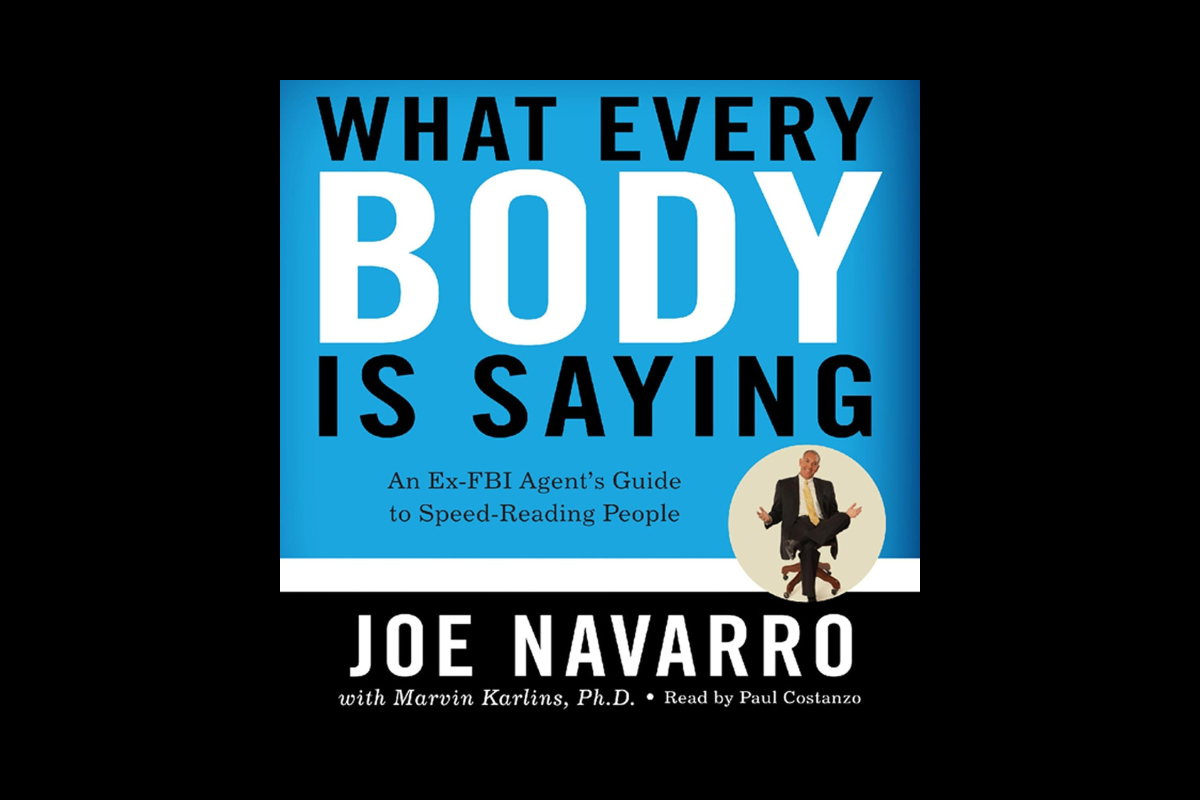
In chapter 4 of What Every Body is Saying, Joe Navarro explains how the torso—including the hips, abdomen, chest, and shoulders—reveals powerful limbic-driven signals because it houses vital organs the brain instinctively protects.
The Protective Nature of the Torso
Navarro begins by noting that the torso contains the heart, lungs, and other essential organs. Because survival depends on safeguarding this area, the limbic brain reacts quickly to threats—real or perceived—by distancing, shielding, or orienting the torso in protective ways.
These reactions are often subtle but highly reliable because they are rooted in automatic survival mechanisms rather than conscious control.
The Torso Lean: Distancing from Discomfort
When we feel uncomfortable, threatened, or displeased, we tend to lean away with the torso. This can happen:
-
In response to a disliked person
-
During an unpleasant conversation
-
When viewing disturbing images
Even slight angling away communicates negative sentiment. Navarro notes that emotional distance in relationships often shows up physically first—less leaning in, more space between bodies, and reduced torso alignment.
Because shifting the torso requires balance and muscular effort, such movements are meaningful and usually limbically driven.
Ventral Denial vs. Ventral Fronting
Navarro introduces two important concepts:
Ventral Denial
The ventral (front) side of the body—face, chest, abdomen—is vulnerable. When we dislike something or feel threatened, we subtly turn this side away. This protective response signals disengagement or discomfort.
Ventral Fronting
When we like someone or agree with them, we orient our torso fully toward them. Lovers, close friends, and aligned colleagues naturally expose their ventral sides to each other. Leaning in and mirroring this orientation (isopraxism) reinforces rapport and trust.
In meetings, agreement is often visible in shared torso alignment, while disagreement shows up as stiff posture, reduced fronting, or leaning away.
The Torso Shield: Creating Barriers
When leaning away isn’t socially possible, people often shield the torso instead. Common examples include:
-
Crossing arms tightly
-
Buttoning a jacket mid-conversation
-
Holding a bag, notebook, or pillow against the chest
-
Adjusting clothing repeatedly
These behaviors serve as subconscious barriers. Navarro emphasizes that the key indicator is change from baseline. Relaxed arm crossing can be neutral, but sudden tight crossing with tension signals discomfort.
He also explains that stress redirects blood flow toward large muscles, which can make people feel physically cold—explaining why distressed individuals often complain of temperature despite a normal environment.
The Torso Bow: Signals of Respect and Deference
Bending at the waist is a near-universal sign of subservience or respect. In some cultures, bowing remains formalized; in others, it appears subtly when acknowledging authority or admiration.
Navarro suggests that slight torso bows can convey deference in cross-cultural settings and may foster goodwill when used appropriately.
Clothing as a “Billboard”
The torso functions as a display surface. Clothing, adornments, and posture communicate:
-
Social status
-
Professional identity
-
Group affiliation
-
Emotional tone
Bright colors attract attention; formal attire signals authority; casual dress can communicate openness. However, Navarro cautions that clothing is culturally prescribed and easily manipulated, so it should be interpreted as part of a broader behavioral context—not in isolation.
Preening and Grooming
Attention to grooming reflects mental and emotional state. When people feel well, they preen and maintain their appearance. Illness, depression, or trauma often lead to neglect of posture, dress, and hygiene.
A slumped torso and lowered shoulders frequently accompany sadness or defeat, while energetic grooming reflects vitality.
Torso Splays and Territorial Displays
Spreading out in a chair or occupying excessive space can signal:
-
Comfort (in relaxed settings)
-
Dominance or disrespect (in formal or confrontational contexts)
Teenagers, for example, may splay out during reprimands as a territorial challenge. In professional settings, such postures can communicate disregard for authority.
Puffing the Chest and Aggressive Displays
Expanding the chest outward is a classic dominance behavior. It appears:
-
During arguments
-
Before physical confrontations
-
In competitive settings
Navarro compares this to animal territorial displays. Chest puffing, leaning in, and even removing clothing during heated exchanges may indicate escalation toward physical aggression.
Breathing Changes Under Stress
When stressed, the chest may visibly heave or expand rapidly. This reflects increased oxygen intake as the limbic system prepares for potential action.
Rapid breathing in a healthy person, without physical exertion, often signals anxiety or emotional arousal.
Shoulder Shrugs and Commitment
Shoulder movement can reveal confidence—or the lack of it.
-
Full, symmetrical shoulder shrugs often accompany genuine uncertainty.
-
Partial or one-sided shrugs may suggest doubt, low commitment, or evasiveness.
Navarro stresses that congruence matters. Strong, balanced movement tends to signal confidence; uneven or hesitant movement may indicate internal conflict.
The “Turtle Effect”: Rising Shoulders
When individuals feel insecure or distressed, their shoulders may slowly rise toward the ears, creating a tucked-in, defensive posture. This resembles a turtle withdrawing into its shell.
This posture often appears:
-
When someone anticipates criticism
-
During guilt or shame
-
After defeat or embarrassment
It reflects vulnerability and a desire to reduce exposure.
Key Takeaway
Navarro concludes that the torso and shoulders provide highly reliable nonverbal cues because the limbic brain instinctively protects this vital region. Leaning, shielding, orienting, expanding, or contracting the torso all communicate emotional states in real time.
By paying attention to these often-overlooked signals—and interpreting them within context—observers gain deeper insight into comfort, dominance, insecurity, agreement, and stress.