
So, you’ve mastered the art of bluffing. You’ve nailed the poker face, memorized hand rankings, and maybe even pulled off a few legendary bluffs. But let’s face it: as iconic as poker is, it’s just one card game in a sea of awesome alternatives. The world of card games is vast, varied, and full of gems that don’t involve pushing all your chips in while dramatically announcing “All in.”
Whether you’re looking for strategy, fast-paced action, or just a casual party game, there’s something for everyone. Let’s dive into the world of card games that go beyond poker—some are classics, others a little more niche, but all of them are worth your time.
1. Bridge: The Chess of Card Games
Let’s start with a heavy hitter. If poker is about psychology and bluffing, bridge is all about logic, memory, and partnership.
Bridge is typically played with four players divided into two partnerships. It starts with a bidding phase, where players communicate (through a set bidding system) how strong their hands are and what suit they’d prefer as trump. Then comes the play phase, where players aim to win “tricks” — groups of four cards, one played by each player.
The twist? You can’t speak during the game. You and your partner must rely on the bidding and the cards played to understand each other’s strategy. It’s like mind-melding with your teammate.
Why it’s awesome: Bridge has depth. People literally spend decades mastering it. There are international tournaments, clubs, online platforms… it’s a serious game with a rich community.
2. Hearts: The Game of Avoiding Points
Hearts is the perfect mix of strategy and chaos, and unlike poker, it’s usually about trying not to win certain cards.
Played with four players, the goal in Hearts is to avoid collecting any hearts (each worth one penalty point) or the dreaded Queen of Spades (worth 13 penalty points). Each round starts with players passing cards to one another — a fun little meta-game in itself — and then players take turns playing cards, trying to either avoid or force others to collect the bad ones.
But here’s the twist: if you manage to get all the penalty cards, you “Shoot the Moon,” and instead of losing 26 points, everyone else gets them.
Why it’s awesome: Hearts is strategic but not overwhelming. You can teach it to your family, but it still gets cutthroat in a competitive group. Plus, watching someone panic as the Queen of Spades heads their way is just good clean fun.
3. Spades: Like Bridge’s Chill Cousin
Spades is another trick-taking game that’s a bit simpler than bridge but still full of strategy.
Each player bids on how many tricks they think they can win with the hand they’re dealt. Spades is always the trump suit, which adds a nice layer of predictability. The game is usually played in partnerships (two vs. two), and your score depends on how close you get to your bid — no more, no less.
Why it’s awesome: Spades has the same satisfying rhythm of bridge, but it’s more accessible. It’s a great “step up” game if you want to graduate from casual games to something deeper.
4. Rummy (and Its Many Cousins)
Rummy is a family of games, not just one, and the core idea is about forming sets (like three 7s) or runs (like 5-6-7 of the same suit).
Classic Gin Rummy is a two-player version that’s fast and elegant. Indian Rummy (popular across South Asia) usually involves 13 cards and a bit more complexity. Then there’s Rummikub, which is like rummy played with tiles instead of cards, and Canasta, which uses two decks and has its own quirky rules.
Why it’s awesome: Rummy games hit that sweet spot between luck and strategy. They’re perfect for casual players but still engaging for veterans. Plus, there’s something deeply satisfying about laying down a perfect run.
5. Euchre: The Midwest’s Best-Kept Secret
Euchre is weird, fast, and wildly fun. It’s beloved in the American Midwest and parts of Canada, and once you learn it, you’ll understand why.
You play with a stripped-down deck (just 24 cards: 9s through Aces), and the highest trump card is not the Ace — it’s the Jack of the trump suit, followed by the Jack of the same color. This leads to some delightfully strange strategy.
Euchre is a partnership game, and each hand is quick, usually just five tricks. There’s bidding, trump, and a lot of yelling. It feels like a rough-and-tumble card game you’d play in a noisy pub, and that’s part of its charm.
Why it’s awesome: Fast rounds, unpredictable turns, and lots of partner interaction. It’s like if bridge took a few tequila shots.
6. Pinochle: Old-School and Underrated
This game deserves more love. Pinochle is a melding and trick-taking game played with a special 48-card deck (two copies of the 9 through Ace of each suit).
The game has a two-phase structure: melding, where you lay down certain combinations of cards for points (like a marriage — a King and Queen of the same suit), and trick-taking, which is where you play out the hand.
It has a bit of a learning curve, especially with scoring, but once you get into it, it’s ridiculously rewarding.
Why it’s awesome: It blends elements of rummy and bridge in a unique way. Plus, it’s steeped in tradition — it’s the kind of game your grandparents might’ve played on Sunday afternoons, and now you can carry the torch.
7. Cribbage: Cards Meet Math
Cribbage is a quirky, brilliant game that uses a board with pegs to keep score (yes, a physical board — very analog chic).
The game is typically played two-player, and each round involves a discard phase (where each player gives up two cards to the “crib”), a play phase (where you alternate playing cards to build up totals like 15 or 31), and a counting phase, where hands are scored based on combos like pairs, runs, and 15s.
Why it’s awesome: It’s brainy without being intimidating. Also, there’s something deeply satisfying about moving pegs on the board — it scratches the same itch as rolling dice or stacking poker chips.
8. Uno: Simple, Silly, and Surprisingly Strategic
Okay, it’s technically a proprietary card game, but Uno deserves a shoutout.
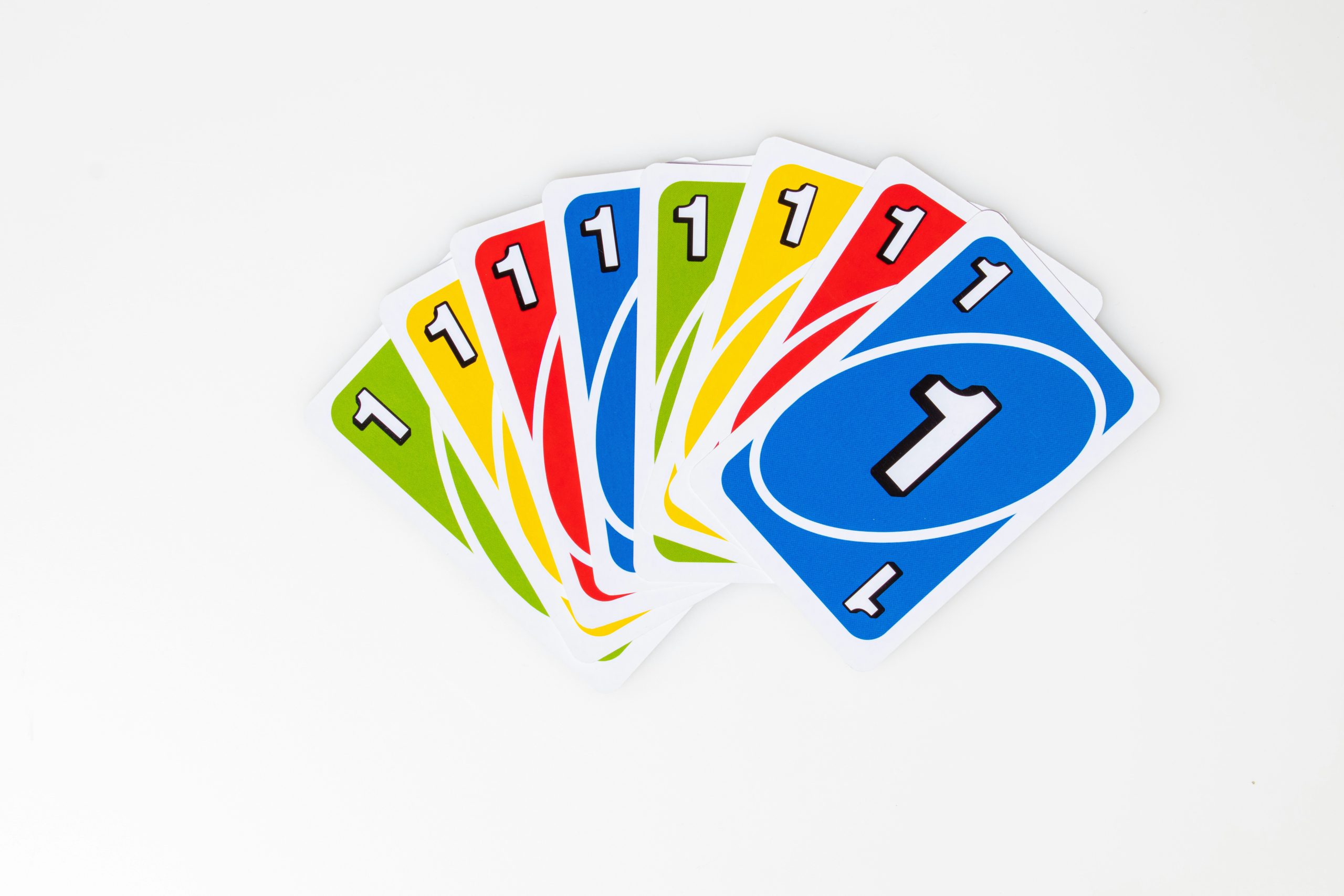
You know the drill: match colors or numbers, throw down special action cards, and try to get rid of all your cards before everyone else. It’s fast, it’s loud, and that Draw Four + Reverse + Skip combo? Utterly savage.
Why it’s awesome: Anyone can play, and everyone has fun. It’s also a gateway to deeper strategy if you’re playing with house rules (which almost everyone does).
9. Exploding Kittens, Coup, and Modern Card Games
In recent years, a wave of modern card games have changed how we think about cards. These aren’t your grandma’s games — they’re stylish, often silly, and designed with social dynamics in mind.
Exploding Kittens is a Russian roulette-style game where you try to avoid drawing a bomb. Coup is all about lying and deduction — like poker distilled into a short bluff-fest. Love Letter, Unstable Unicorns, and Sushi Go! are others that deserve honorable mentions.
Why they’re awesome: They’re usually quick to learn, perfect for groups, and come with creative themes. Plus, they often come in compact boxes — ideal for travel or casual hangouts.
10. Solitaire and Patience Games: For When You’re Flying Solo
Let’s not forget the card games that don’t require a group. Solitaire isn’t just the one with the bouncing cards from Windows 95.
There are dozens of solo variants, from the well-known Klondike to more complex ones like Spider Solitaire, FreeCell, or Yukon. These games are all about patience, planning, and a bit of luck.
Why they’re awesome: Great for unwinding or killing time. You don’t need a group or internet. Just a deck and a little headspace.
Final Thoughts: So Many Cards, So Little Time
Poker is iconic for a reason — it’s tense, dramatic, and strategic. But it’s far from the only game in town. Whether you’re into quiet mental duels like Cribbage, team-based mind games like Bridge, or party-friendly chaos like Uno, there’s a card game out there waiting for you.
Honestly? Learning a new card game is one of the best things you can do for your brain and your social life. It opens up new ways to connect with people, exercise your memory and logic, and — let’s not forget — have fun.
So next time you’re tempted to pull out the poker chips, consider trying something new. You might just find your next obsession.