
Poker didn’t appear overnight in a smoky saloon or a Las Vegas casino. It evolved gradually, shaped by travel, migration, and cultural exchange. Bluffing and betting existed long before the modern game. Poker simply organized those instincts into a structured contest of skill and nerve.
Let’s walk through how it all developed.
Early Origins: Before Poker Was “Poker”
Long before poker had a name, several card games across Europe and the Middle East were already using betting systems and ranked hands. These early games laid the groundwork for what would eventually become poker.
Persian Roots: As-Nas
Some historians trace poker’s ancestry to the Persian game As-Nas, played as early as the 16th or 17th century. It used a smaller deck and relied on hand rankings and betting rounds. Bluffing was already part of the experience.
While it wasn’t poker in its final form, it introduced key structural elements that would later define the game.
European Ancestors
Other strong influences came from Europe:
-
The French game Poque
-
The German game Pochen
-
The Spanish game Primero
These games featured betting, deception, and competitive hand comparisons. The word “poker” likely evolved from the French poque. As people traveled, especially to the Americas, these games evolved along with them.
Poker Arrives in America
Poker began to take on its recognizable form once it reached the United States. The cultural mixing of early America provided the ideal environment for the game to evolve.
French Influence in Louisiana
In the early 1800s, French settlers in Louisiana were likely instrumental in introducing poker to American soil. New Orleans, a major port city, became an early hub for gambling culture.
At first, the game used only 20 cards and was typically played by four players. Eventually, the 52-card deck became standard, allowing for more players and a wider range of hands.
The Mississippi River Era
As trade expanded along the Mississippi River, so did poker. Steamboats carried merchants, travelers, and professional gamblers. Long journeys created ideal conditions for card games.
Poker spread rapidly along river towns. It gained a reputation for both excitement and danger. Cheating was common, and disputes were not unusual. Even so, the game’s popularity continued to grow.
The Wild West and Gambling Saloons
As Americans moved westward, poker followed. Frontier towns and mining camps provided new settings for the game.
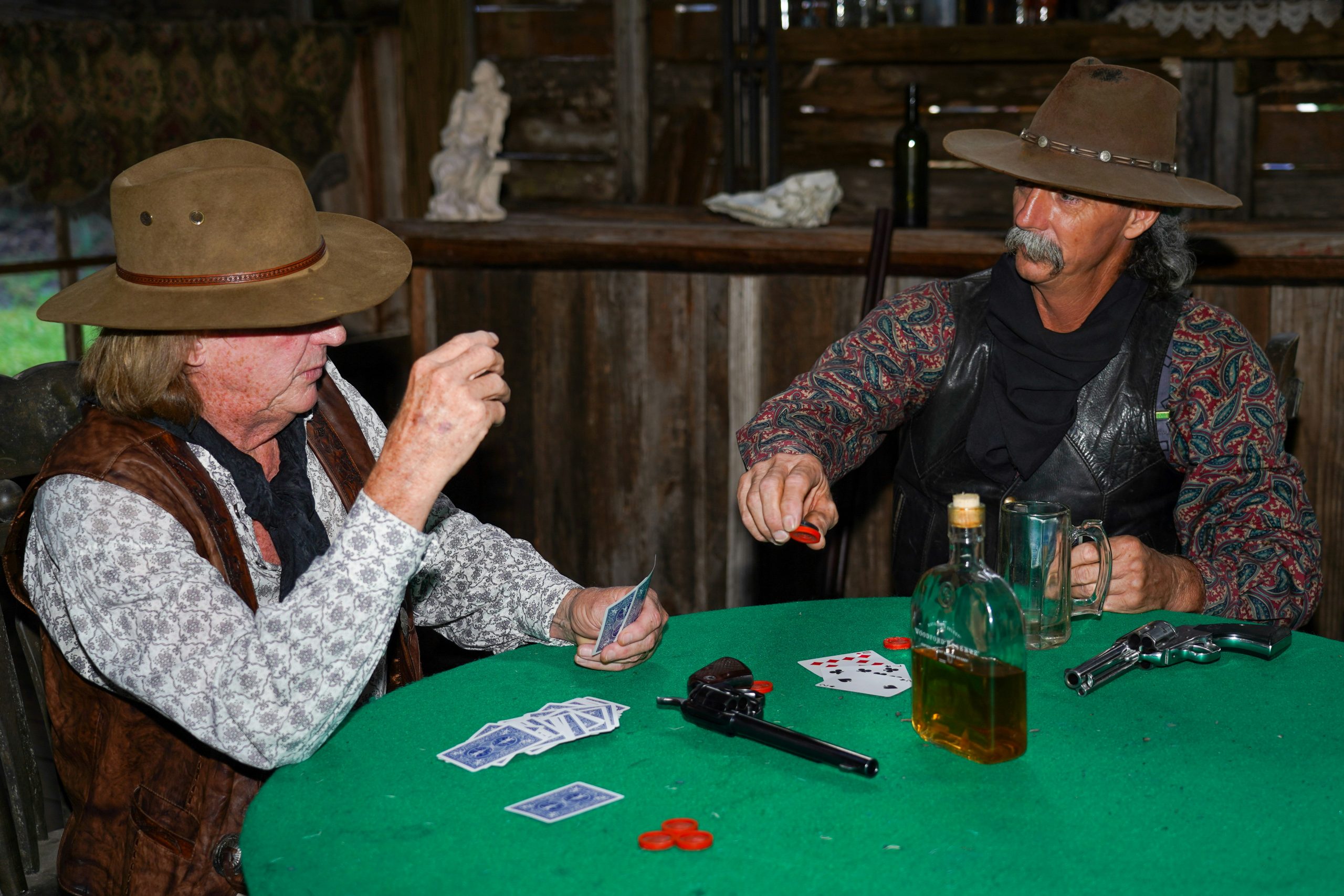
Saloons became informal poker rooms. The popular image of tense games under dim lantern light became part of American folklore. While Hollywood later exaggerated this era, poker was indeed common in frontier communities.
The game became associated with independence and risk-taking, traits that matched the spirit of westward expansion.
The Birth of Modern Variants
By the late 19th and early 20th centuries, poker had diversified. Different versions gained popularity in different regions.
Stud poker, especially five-card and seven-card stud, became widely played. These versions dominated home games and military circles for decades.
The Rise of Texas Hold’em
In the early 1900s, a variation known as Texas Hold’em developed in Texas. Unlike earlier forms, it used community cards shared by all players. This added new layers of strategy.
In the 1960s, professional players introduced Texas Hold’em to Las Vegas casinos. The structure encouraged larger betting rounds and more complex decisions. Over time, it became the dominant tournament format.
Las Vegas and the World Series of Poker
Las Vegas played a central role in turning poker into a professional sport. Legalized gambling in Nevada created stable venues for organized competition.
In 1970, the first World Series of Poker was held. It was organized by Benny Binion, who wanted to gather the best players in one place.
The event started modestly but grew steadily. Winning the WSOP became the highest achievement in professional poker.
The Online Poker Boom
The arrival of the internet transformed poker once again. In the late 1990s, online platforms allowed players to compete from home.
A major turning point came in 2003 when Chris Moneymaker won the World Series of Poker Main Event after qualifying online. His victory showed that amateurs could compete with seasoned professionals.
Participation surged worldwide. Online poker rooms expanded rapidly. Although legal challenges in 2011 slowed growth in the United States, poker remained firmly established as a global game.
Poker in the Modern Era
Today, poker exists both as entertainment and as serious competition. Televised broadcasts use hole-card cameras to reveal hidden information to viewers. Streaming platforms allow fans to follow games in real time.
Professional players now rely on probability theory, psychology, and game theory. Training software and data analysis have become common tools.
Poker has moved far beyond its riverboat origins, but the core experience remains the same: incomplete information, strategic betting, and controlled risk.
Cultural Impact of Poker
Poker has left a strong mark on language and popular culture. Terms like “all in” and “ace up your sleeve” are widely used outside card rooms.
The game often serves as a metaphor for negotiation and calculated risk. It rewards patience, discipline, and emotional control. These qualities have helped poker maintain relevance across generations.
Conclusion
Poker developed over centuries through cultural exchange and adaptation. It absorbed influences from Persia and Europe. It matured in the United States. It professionalized in Las Vegas. It expanded online.
The game continues to evolve, but its appeal remains consistent. Poker challenges players to make decisions under uncertainty. That tension, more than anything else, explains its lasting popularity.