admin

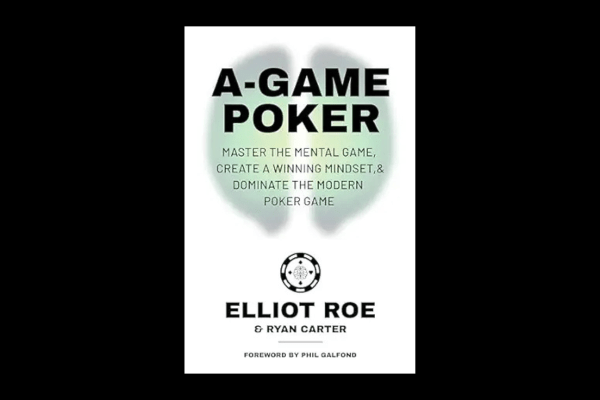
Chapter 5 of A-Game Poker by Elliot Roe: The Six Levers of Poker Profits

In this chapter, Elliot Roe introduces the Six Levers of Poker Profits, a framework that explains how various interconnected factors determine a poker player’s overall profitability. While technical skill is critical, it is not the sole determinant of success. Many players mistakenly believe that increasing their skill alone will significantly boost their profits, but Roe…
Read Full News

Chapter 3 of A-Game Poker by Elliot Roe: Your Next Big Breakthrough

Elliot Roe argues that while poker has evolved significantly in strategy and accessibility to information, the next major edge for players will not come from strategy alone. Instead, it will come from optimizing physical and mental performance. The Evolution of Strategic Edges Throughout poker’s history, different generations of players have gained an advantage through evolving…

Read Full News

Chapter 2 of A-Game Poker by Elliot Roe: The Evolution of a Winning Poker Player

In chapter 2 of A-Game Poker, Elliot Roe explores how poker has evolved over the decades, illustrating the rapid advancements in strategy, technology, and competition. He argues that success in poker is not about mastering a fixed set of skills but about continuously adapting to an ever-changing game. Poker’s Evolution Over Time Roe compares poker’s…

Read Full News

Chapter 1 of A-Game Poker by Elliot Roe: Introduction

The introduction of A-Game Poker establishes the book’s core premise: the importance of mindset in achieving long-term success in poker. While some players dismiss mindset as irrelevant compared to technical skill, Roe argues that it is a crucial component for top-level performance. His goal is to convince open-minded players that improving their mental game is…

Read Full News

Conclusion of Secrets of Professional Tournament Poker

In the conclusion of Secrets of Professional Tournament Poker, Jonathan Little emphasizes that strong tournament performance rests on a deep understanding of core principles such as aggression, pot control, hand ranges, and accurate reads. Throughout the book, he has outlined a fundamentally sound framework designed to guide players through every stack depth and common tournament…

Read Full News

Chapter 15 of Secrets of Professional Tournament Poker: Playing Short Stacked (less than 40BB): When You Have less than 5 BBs

In chapter 15 of Secrets of Professional Tournament Poker, Jonathan Little explains that once you drop below 5 big blinds, you no longer have the normal strategic tools—your job is to find chances to get all-in with acceptable equity and, when possible, some fold equity. He emphasizes you should rarely reach this point; if you…

Read Full News

Chapter 14 of Secrets of Professional Tournament Poker: Playing Short Stacked (less than 40BB): When You Have Between 12 and 15 BBs

In chapter 14 of Secrets of Professional Tournament Poker, Jonathan Little explains that when you have between 12 and 15 big blinds, tournament poker becomes almost entirely a pre-flop math problem. Complex post-flop maneuvering disappears, and most decisions revolve around whether to shove, call a shove, or fold. He emphasizes that most players make large…

Read Full News

Chapter 13 of Secrets of Professional Tournament Poker: Playing Short Stacked (less than 40BB): When You Have Between 15 and 27 BBs

In chapter 13 of Secrets of Professional Tournament Poker, Jonathan Little explains that once you drop below ~30 big blinds, your stack gains leverage: opponents must constantly respect the threat that you can move all-in. With a reasonably balanced range, this pressure makes you harder to play against. He emphasizes that the correct strategy depends…

Read Full News