
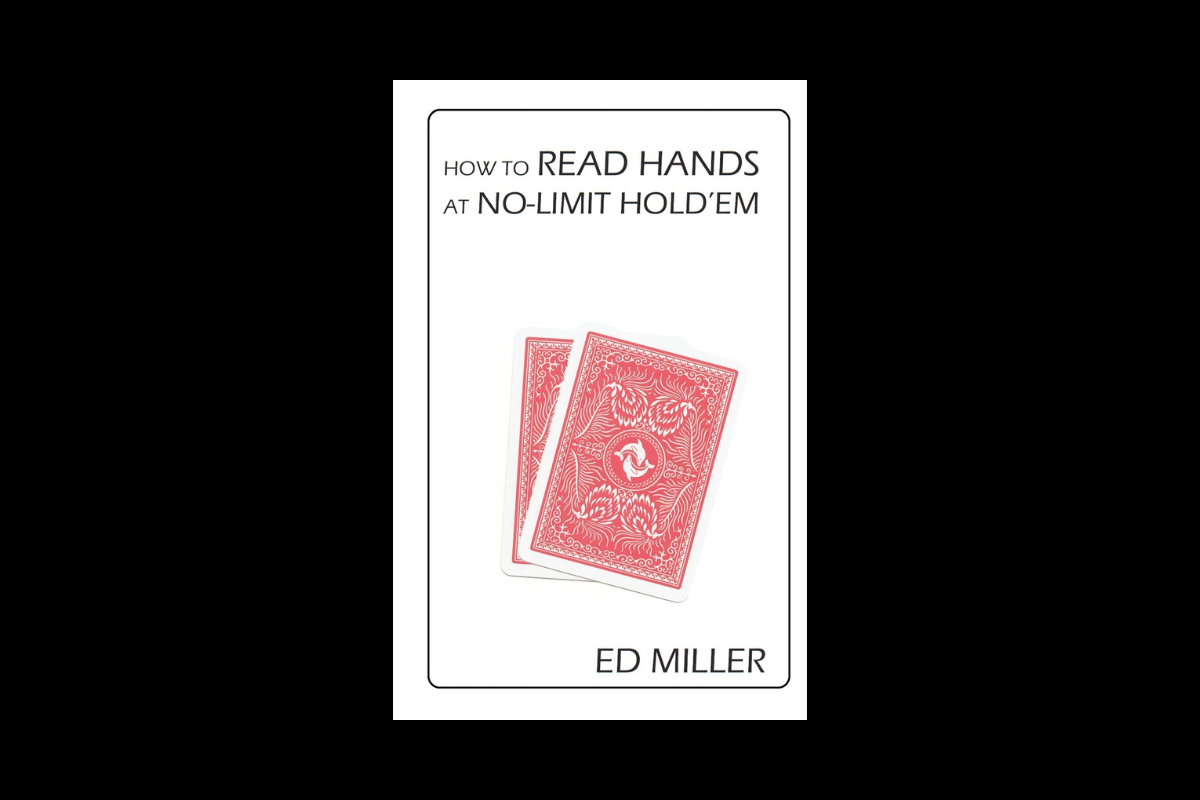
In the introduction of How To Read Hands At No-Limit Hold’em, Ed Miller emphasizes that the ability to read opponents’ hands is the central skill required to win consistently at no-limit hold’em. He argues that players who can accurately interpret what their opponents are likely holding gain a decisive edge, while those who cannot will find long-term success difficult.
Who the Book Is For
Miller explains that the book is designed for players competing in:
-
Live cash games up to roughly $5-$10 stakes
-
Small-stakes online games
-
Typical home games
-
Early stages of no-limit hold’em tournaments where stacks are still deep
The techniques are positioned as practical tools for beating medium-level games, with the claim that strong hand-reading ability can translate into substantial hourly earnings in common live cash settings such as $2-$5 games.
What Hand Reading Really Means
Hand reading is presented as the disciplined process of deducing an opponent’s likely holdings using available information. While players often focus on physical tells, timing, or subtle behavioral cues, Miller highlights that betting patterns provide the most reliable and valuable information. Throughout the book, betting action serves as the primary foundation for analysis.
A Logical, Non-Mystical Approach
The author makes it clear that the book does not rely on intuition, gut feelings, or vague instincts. Rather than promoting a mystical sense for the game, he advocates a structured and rational method. The emphasis is on clarity of thought, consistent reasoning, and repeatable decision-making.
Learning Through Examples
The introduction outlines the book’s example-driven format. Readers are expected to actively work through hands, applying a systematic process to narrow down possibilities and arrive at logical conclusions. Miller stresses that effective hand reading does not require special talent, but instead depends on disciplined thinking and consistent practice.
Core Message
Ultimately, the introduction frames hand reading as both an essential skill and a trainable one. With focused study and repetition, players can significantly improve their ability to interpret opponents’ ranges and make stronger decisions at the table.